Did you know that there are tons of toys your child can play with to strengthen their hands, build coordination, and support their long term development?
Fine motor skills are especially important, as they impact children’s ability to interact with their environment. Those hand and finger movements help kids learn to grasp, pinch, stack, poke, twist, and eventually write, dress, feed themselves, and become independent.
Strong fine motor skills support school readiness, confidence, and everyday success. This is especially true for children with developmental differences.
At Eyas Landing in Chicago’s West Loop, our expert therapists think deeply about how to help families support these skills at home. Parents want toys that are fun and engaging, but also meaningful and therapeutic. That’s why gift giving moments are such a powerful opportunity to choose toys that strengthen development while still sparking joy.
This guide highlights 20 of the best fine motor toys, each selected by pediatric therapists for its ability to strengthen hand muscles, improve coordination, and support early learning.
If you’d like more personalized insights, please contact us today. We’re here to support you every step of the way!

1. Tomy Toomies Hide and Squeak Eggs
These eggs require kids to crack, twist, match, and align pieces. They are excellent for strengthening hand muscles and improving hand‑eye coordination as children must use precise finger movements to open and close each egg. The toy also promotes bilateral coordination as children use both hands together to manipulate the pieces.

2. Vtech Latches and Doors Busy Board

3. Playskool Explore ‘N’ Grow Busy Gears
Turning and stacking the gears strengthens hand and finger muscles needed for precise movements. Lining up the gears helps improve hand–eye coordination and control. As children experiment with how the gears fit and move, they develop spatial awareness and an understanding of cause and effect. The lights and music keep children engaged, allowing for repeated practice of fine motor skills through play.

4. Learning Resources Spike The Fine Motor Hedgehog

5. Fisher-Price Laugh & Learn Smart Stages Piggy Bank
Dropping coins into the slot practices controlled hand movements, accurate hand‑eye coordination, and grasping skills. Pressing the pig’s nose strengthens finger muscles and encourages repetition. The interactive songs motivate children to repeat these actions, reinforcing fine motor practice through engaging play.

6. Melissa & Doug Shape Sorting Cube
This classic wooden toy builds grasping, turning, and problem‑solving skills. The resistance of the wooden shapes provides excellent proprioceptive feedback, helping kids learn how to adjust their movements.

7. Playy22 Activity Cube with Bead Maze
Sliding beads, spinning blocks, and turning gears all strengthen fine motor control. The bead maze is especially helpful for developing smooth, coordinated hand movements.
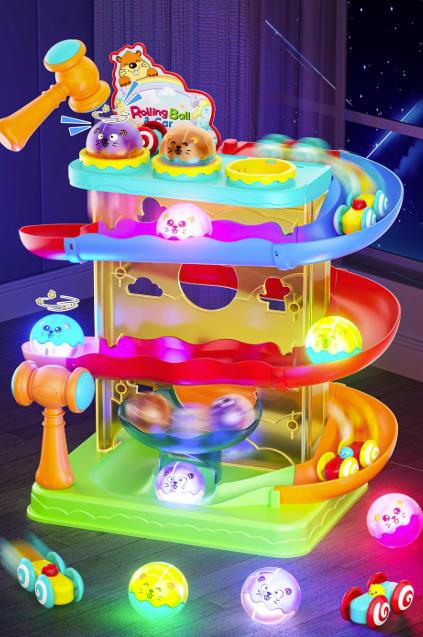
8. Ball Drop & Car Ramp Race Track
Hammering pegs and watching light-up balls roll builds hand-eye coordination, which is how your child’s eyes and hands learn to work together. Each swing helps strengthen arm and wrist control and teaches your child how much force to use. The sounds, movement, and bright colors keep kids interested, so they’re happy to keep practicing.
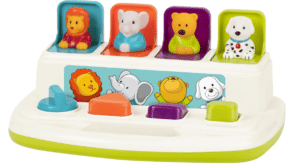
9. Battat Pop-Up Pals, Cause-and-Effect Pop-Up Animal Toy

10. Learning Resources Hoot the Finer Motor Owl
Grasp, squeeze, and place the colorful, shape-based pieces or use the tools to pick up and sort them. This strengthens hand muscles and improves coordination, supporting the development of scissor skills by building hand strength and control. Matching shapes and colors also requires precise hand-eye coordination and controlled movements.
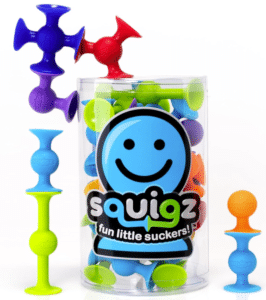
These suction cup toys require kids to push, pull, and twist, which is excellent for strengthening finger muscles and improving grip strength. The “pop” sound provides sensory feedback that keeps kids engaged.
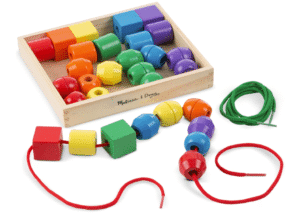
12. Melissa & Doug Lacing Beads
Lacing beads build bilateral coordination, pincer grasp, and visual motor integration. Threading beads mimics early dressing skills like buttoning and zipping.
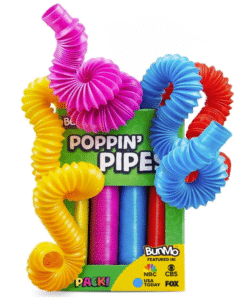
13. Pop Tubes (Sensory Fine Motor Tubes)
Pulling, twisting, and bending pop tubes strengthens the entire hand. They’re especially helpful for children who need extra proprioceptive input or sensory regulation.
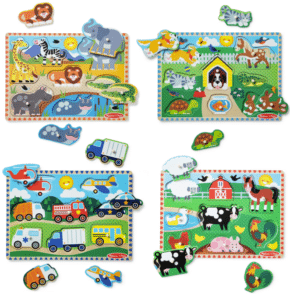
14. Wooden Peg Puzzles (Melissa & Doug)
Peg puzzles encourage toddlers to grasp with fingertips, improving pincer grasp and hand eye coordination. They also support early problem solving and visual discrimination.
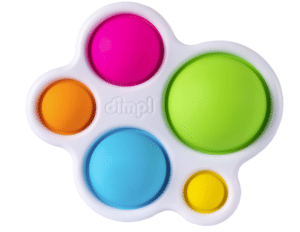
Pressing the silicone bubbles strengthens finger isolation and hand control. This toy is especially beneficial for toddlers who need repetitive, calming fine motor practice.
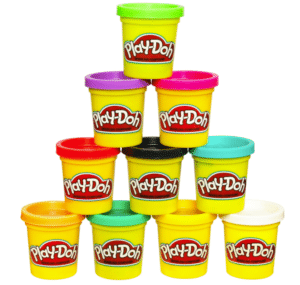
Squishing, rolling, pinching, and pulling Play Doh builds hand strength and finger dexterity. It’s one of the best tools for preparing kids for handwriting and self care tasks.
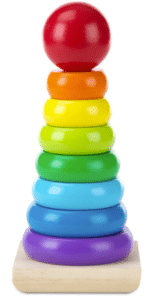
17. Wooden Stacking Rings (Melissa & Doug)
Stacking rings require toddlers to grasp, release, and align pieces. This builds precision and supports early spatial awareness.
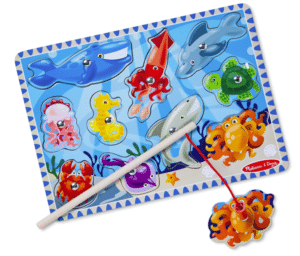
Using a magnetic fishing pole requires controlled wrist movement, hand eye coordination, and bilateral hand use. It’s also a great early pre-writing activity.
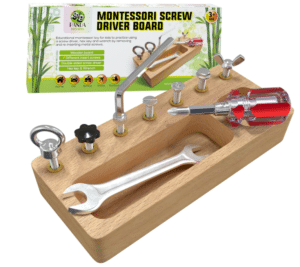
19. Montessori Screwdriver Board
Turning screws with a screwdriver builds wrist rotation, grip strength, and finger control. This toy is especially helpful for kids who love tools and mechanical play.
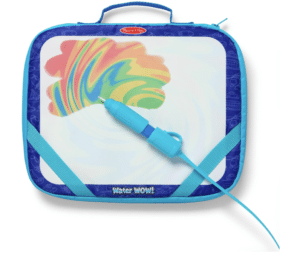
20. Melissa & Doug Water Wow! Reusable Painting Boards
Using a water brush requires controlled hand movements and finger isolation. These boards are mess free and perfect for kids who need practice with early writing strokes.
Final Thoughts from Eyas Landing
Fine motor development is essential for kids, especially those with Autism, ADHD, sensory processing differences, or developmental delays. The right toys can make a meaningful difference by strengthening hand muscles, improving coordination, and supporting early learning. All through play.
At Eyas Landing, we believe families deserve tools that make home practice easy, joyful, and effective. These 20 toys are therapist approved, child approved, and developmentally powerful.
FAQ
What are fine motor skills, and why do they matter for my child?
Fine motor skills are the small muscle movements kids use in their hands and fingers, like grasping, pinching, and squeezing. These skills help your child button a shirt, hold a pencil, zip a jacket, and feed themselves. Strong fine motor skills support independence in everyday tasks and build a foundation for school skills like writing and cutting. For children with developmental differences, practicing these movements through play can make daily routines feel more manageable and less frustrating.
How do I know if my child needs help with fine motor skills?
You might notice your child needs support if they avoid activities like coloring, have trouble with buttons or zippers, or seem frustrated during tasks that require small, precise movements. These are signs worth paying attention to, not something to feel alarmed about. Every child develops at their own pace, and these observations are simply useful starting points for a conversation with a professional. If you’re noticing these patterns consistently, a developmental evaluation can offer clarity and help you understand your child’s unique strengths and needs.
What should I look for when choosing a fine motor toy?
Look for toys that match your child’s current skill level while offering just enough challenge to encourage growth. A toy that’s too advanced can lead to frustration, while one that’s too simple may not hold your child’s interest. When in doubt, a therapist can help you narrow down options based on your child’s individualized goals.
This post was originally published in October 2023 and was rewritten in November 2026 to include updated strategies.
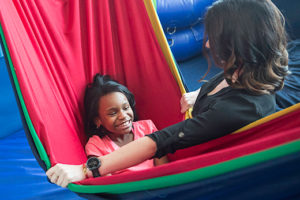
Eyas Landing is a therapy clinic with a mission to provide evidence-based and family-centered therapy services for children, adolescents, and their families. The primary goal is to deliver relationship-based interventions within the most natural environments and to empower families to reach their full potential. To achieve this goal, our highly educated, compassionate staff dedicates time and expertise to create experiences that maximize therapeutic outcomes. The strength, determination, and perseverance of our clients are evident as they succeed in therapy, and ultimately in their daily lives.
Eyas Landing offers a wide range of comprehensive services including Speech Therapy, Occupational Therapy, Physical Therapy, ABA Therapy, Social Work, Family Therapy, and Neuropsych testing. Services are provided throughout the Chicagoland area via Telehealth, In-Home, and in our state of the art clinic.
Want to learn more or you have a specific question? Feel free to connect with us here!