The Importance of Visual Perceptual Skills on Performance
Ever spent five minutes staring into the fridge looking for ketchup, only for someone else to find it in two seconds? It happens. If ketchup bottles had GPS, maybe we would not have to defend our honor so often. Consider, though, how challenging things could be if that sort of “blind spot” happened dozens of times per day, in every setting—not just in the kitchen. For many kids, this is part of the daily routine. They are not careless. Their brains process what they see a bit differently.
Visual perception involves more than just clarity of eyesight. It lets us put the puzzle of daily life together—whether that means matching socks, reading a book, or figuring out where “right” is when your soccer coach says, “Go to your right!” Without these skills, school, play, and even chores start to feel like a maze with hidden doors.
What Are Visual Perceptual Skills?
Visual perceptual skills make it possible to recognize patterns, remember where things are, pay attention to key details, and understand what we see. Schools may focus on vision screenings, but vision alone does not guarantee that a child can process visual information usefully. Below, we dig into the seven distinct visual perceptual skills, what they look like at home, at school, and in the world, and ways to support them every day.
Visual Discrimination
Imagine being asked to spot the differences in two nearly identical pictures. Visual discrimination is what allows us to do that. It helps us pick out the correct book from the bookshelf, find our shoes in a crowded closet, or spot our favorite character in a busy illustration.
At school, this skill keeps your child from confusing similar letters or math symbols (“+” for “x”—a mix-up that can be rough during quizzes). For kids learning to read, visual discrimination is part of recognizing individual letters, especially ones that look nearly the same, like “m” and “n” or “p” and “q.” In math, it helps them notice the difference between a “6” and a “9” or between “<” and “>”. Worksheets with tiny checkboxes? Guess who needs strong visual discrimination to fill out the right box.
Day to day, a child uses this skill to tell whose lunchbox is theirs or find their name tag on a crowded bulletin board. Without it, sorting, matching, or following instructions becomes guesswork.
Strengthening Visual Discrimination at Home:
- Sort colored buttons, beads, or blocks by shade and size
- Play “spot the difference” games using picture books or printable worksheets
- Find matching socks during laundry time
- Ask your child to organize a game shelf by color or size
- Use cooking to sort lentils from beans or separate sprinkles by color
Make it playful—children love the challenge when the task feels like a game instead of homework.
Visual Memory
Visual memory helps us remember what we have seen, whether it’s a word on the page, the color of a friend’s backpack, or how to trace a shape. It’s the brain’s version of a quick snapshot.
In school, strong visual memory means your child can remember sight words, math facts, or spelling patterns after one or two exposures. It also helps when following directions with multiple steps—such as “put your folder on my desk, then hang up your backpack.” Children who struggle here may seem forgetful, ask for reminders, or have a tough time copying notes from the board.
Home life calls for visual memory too: remembering which remote is for the TV, which key goes to the back door, or how to set the table in the same way each meal.
Ways to Build Visual Memory:
- Memory card games (“Concentration”) with matching pairs of animals, numbers, or shapes
- Play “What’s Missing?”: Arrange familiar objects, cover them, remove one, and let your child guess what is gone
- Visual scavenger hunts during walks or car rides (“Let’s find three red cars and two yellow flowers!”)
- Copying patterns with blocks, beads, or drawing shapes after seeing them briefly
Keep everything light. Praise your child for effort, not just recall—this encourages persistence when things get tough.
Spatial Relations
Spatial relations tell us where things—and our bodies—are in relation to everything else. Ever watched a child try to put a puzzle piece upside down fifteen times? That is spatial relations working overtime.
On the playground, this skill helps kids climb the jungle gym without bumping heads, kick a ball without missing, and give their friends enough space. At school, it is behind letter and number placement (“b” sits on the line, “p” drops below), map reading, and understanding graphs.
At home, it pops up when pouring juice without spilling, getting shoes on the correct feet, or figuring out how to fit all the groceries in the pantry.
Ideas for Boosting Spatial Relations:
- Jigsaw puzzles and tangrams
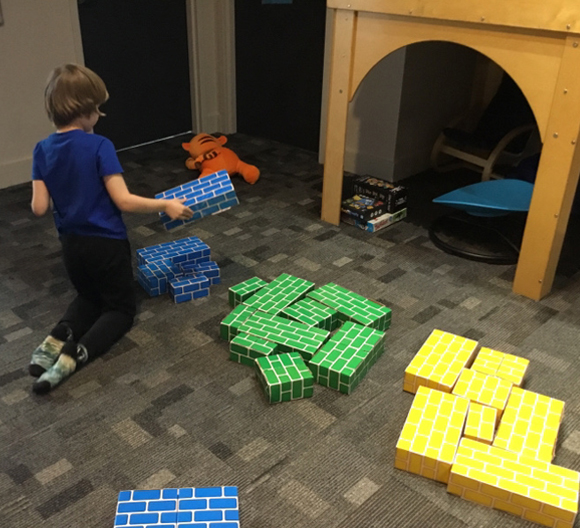
- Building with blocks or LEGO sets—ask your child to copy a structure you create
- Treasure hunts where directions include “under,” “next to,” and “behind”
- Draw arrows on paper and have your child follow the direction with a toy car
- Play Simon Says using spatial words (“Simon says put your hand above your head”)
Talk about positions aloud as you play—“You put the bear beside the blocks”—this supports language and spatial thinking.
Form Constancy
Form constancy means recognizing that objects stay the same, even when they appear different. A pencil is still a pencil, whether it’s lying flat or standing in a cup.
This skill is busy during handwriting practice. Children need form constancy to recognize both uppercase “A” on the poster and lowercase “a” in their workbook, even if it is in fancy script or a cartoon font. In the math section, it means knowing that a square is still a square, whether it is big or small, diagonal, or upright.
At home, form constancy may show up while looking for their favorite shirt—first time folded, second time hanging, third time in the laundry basket, all recognizable as “my dinosaur shirt.”
Fun Activities for Form Constancy:
- Find letters or shapes in magazine titles, cereal boxes, or road signs, even when fonts change
- Draw shapes or write letters using different sizes and colors—have your child say what each is
- Create a “Shape Hunt” where your child finds circles, squares, and triangles in different rooms in different positions
- Use cookie cutters with dough and encourage noticing how the shape stays the same
- Match uppercase and lowercase letters on a board or with magnets
When kids see how things can look different but stay the same, schoolwork becomes more manageable—and so does finding those shoes under the couch.
Sequential Memory
Remembering the right order is key for many daily tasks. Sequential memory lets us recall the sequence of numbers, letters, or movements.
Spelling is a direct output of sequential memory—mix up the letters, and the word “cat” becomes “tac” or “act.” Math relies on this for “2+3=5,” not “3=2+5.” For reading, it is about following the correct order of story events.
Home life uses sequential memory for routines: brushing teeth (toothpaste first, then brushing), recipes (flour before eggs), and simple “get ready” checklists. Children with difficulty in this area might forget a step, repeat one, or get things out of order.
Strengthening Sequential Memory:
- Recite nursery rhymes or simple stories together, one line at a time
- Play “Simon Says” with a growing list of instructions (“touch your toes, clap your hands, spin around”)
- Sequence cards for familiar routines (the steps of making a sandwich, washing hands, or getting dressed)
- Use music or clapping games—repeating rhythmic patterns in the right order
- Tell a silly, three-step story and ask your child to repeat the sequence
Keep the sequences short at first and lengthen as confidence grows.
Figure Ground
Life is full of distractions. Figure ground helps your child find the right information in a busy environment—seeing their line in a paragraph of text or finding a red crayon in a box full of colors.
In school, this might mean finding the correct worksheet buried under piles of paper or picking out their answer in a word search. On the playground, kids look for their family in a crowd or their water bottle among many others.
At home, figure ground is busy during activities like locating a missing shoe at the bottom of a dark closet, or spotting their toothbrush in an overcrowded cup.
Activities to Enhance Figure Ground:
- “I Spy” games at home, in the car, or when shopping
- Hidden picture books (where’s Waldo, anyone?)
- Organize a busy drawer together and have your child look for specific items by name or color
- Use placemats with lots of images—ask your child to point to items you call out
- Draw or print pictures with lots of shapes and see how fast your child can locate the ones you name
Vary the environment—sometimes have your child look for things in dim light, among messy items, or in outdoor settings.
Visual Closure
Visual closure lets us fill in gaps. We recognize Grandma’s face, even if half her picture is covered by a birthday card or we understand that a street sign means “STOP,” even if a branch covers part of it.
Fast readers use visual closure to recognize whole words instead of sounding out every letter. It helps with unfinished puzzles—children see what the image is supposed to be and can finish it.
Home life often calls on this when putting together toys without all the instructions or identifying objects when part of them is hidden or missing.
Supporting Visual Closure:
- Complete dot-to-dot images and leave some dots unconnected
- Work with incomplete pictures—ask your child what the picture would be if finished
- Play “Guess the Drawing”—sketch half of an object and let your child guess what it is
- Cut familiar pictures into puzzle pieces, leave one piece out, and let your child determine what is missing
- Provide tracing worksheets where parts of the shape are missing and have your child finish drawing them
Remember, visual closure makes problem-solving and reading both quicker and less stressful.
Recognizing Visual Perceptual Difficulties
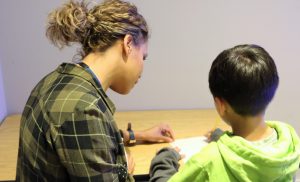
Kids will not always tell you they are struggling with these skills, but signs often show up in everyday life. If you notice your child getting frustrated losing their place when reading, having persistent trouble completing puzzles, struggling with handwriting, or simply seeming unusually tired after activities that seem simple for their age, visual perception could be a piece of the puzzle.
Other clues might appear when your child:
- Has trouble copying from the chalkboard
- Takes a long time to get organized before starting schoolwork
- Mixes up shapes, letters, numbers, or colors
- Struggles with games that require matching, sorting, or patterning
- Seems to lose things in busy rooms, drawers, or backpacks
- Gets confused during multi-step directions
Supporting Visual Perceptual Development at School
Teachers and specialists use a variety of classroom strategies to help. They might:
- Provide clear desk spaces, free from extra clutter
- Offer high-contrast worksheets (think black writing on white paper)
- Use color coding for folders, notebooks, or cubbies to increase visual cues
- Break long assignments into short, step-by-step instructions
- Let students use highlight strips or reading windows to track lines of text
- Choose workbooks with big, bold print
- Arrange seating to give the least amount of distractions, like sitting close to the front or away from windows
Teachers who spot consistent struggles with these skills usually pair up with occupational therapists, who can offer targeted assessment and supports.
Everyday Tools and Games for Parents
You do not need special equipment or fancy programs to help your child build these skills at home. Many familiar activities double up as exercises for visual perceptual development.
- Board games like “Memory,” “Guess Who?,” or “Uno” work on visual discrimination, memory, and sequencing
- Puzzles are champions for nearly all these areas, especially figure ground, spatial relations, and visual closure
- Sorting games with spoons, shells, or toy cars help tune up classification and discrimination
- Drawing, coloring, and mazes boost discrimination and memory
- Building towers, playing with play dough, or stacking cups test spatial and sequencing abilities
- Cooking together builds sequence memory (following a recipe) and spatial sense (measuring)
- Map reading during a family drive supports spatial relations and positional language
Make these activities part of the day, not “extra work.” Your child will develop skills as they play, and the entire family benefits from shared time.
Partnering with Specialists: How Assessment Helps
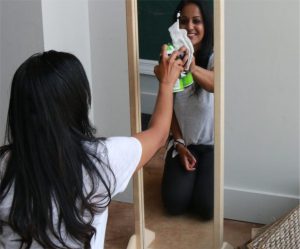
When you wonder if your child needs more support, it often helps to start with a trusted occupational therapist. These specialists know how to break down skills, spot strengths, and identify areas for growth. During an assessment, the therapist might use hands-on activities, puzzles, drawing tasks, or interactive games. Children usually enjoy the process because it feels like play, not a test.
Afterward, you will have a detailed profile of your child’s visual strengths and needs, plus a clear plan for moving forward. The point is not to label, but to understand. This means everyone on your child’s team—parents, teachers, caregivers, and therapists—can pull in the same direction.
Building Independence and Confidence
The main goal is not just better grades or tidier rooms—it is giving your child the freedom to do things by themselves. Visual perceptual strength often shows up as small steps: tying shoes without anxiety, organizing a backpack without adult help, or finishing a puzzle independently.
As skills grow, your child tackles daily challenges more confidently, spends less energy on small frustrations, and has more left for play, friendships, and family time. If you are ready to get answers or just want strategies tailored for your family, occupational therapists at Eyas Landing are ready to help.
Frequently Asked Questions About Visual Perceptual Skills
What are typical signs that visual perceptual struggles are affecting my child?
Common signs include frequent letter or number reversals, losing their place on a page, trouble copying from a board, trouble with puzzles or finding objects in clutter, or reluctance to start schoolwork that relies on reading or writing.
Can strong visual perceptual skills be taught or trained?
Most children can make real gains using targeted, fun exercises at home and in therapy. Progress comes from consistency and positive encouragement.
Do these skills improve on their own as kids get older?
Some kids develop them naturally with time, but structured support can make a big difference, especially if challenges interfere with academics, organization, or self-confidence.
How do I know if a specialist assessment is the right next step?
If your child’s challenges persist across home and school even with lots of encouragement and practice, a formal evaluation provides deeper understanding and helps you access extra resources and individualized strategies.
Taking the First Step
Visual perceptual skills influence everything from homework to playtime. By tuning into your child’s strengths and struggles, you build a foundation for lifelong skill growth—and a happier, more self-sufficient child. No one has to do it alone. If you have questions or if you are ready to schedule an assessment, connect with Eyas Landing. Our team is committed to walking alongside your family, adapting our supports to fit your child’s wonder-filled journey.
“Eyas” is defined as a young hawk in the developmental stage of learning to fly. At Eyas Landing, it’s not only
about the flight, but also the landing. “As our clients succeed in therapy, they succeed in every aspect of their daily life.”- Dr. Laura Mraz, OTD, OTR/L Founder of Eyas Landing since 2007
Three Birds. One Mission.
Eyas Landing is just one part of your child’s journey! Our sister companies, Blue Bird Day and Merlin Day Academy, work together to support your child as they grow. Blue Bird Day, our therapeutic preschool and kindergarten program, is an intensive rotational therapeutic program designed to provide children ages 2-7 with the tools they need to succeed in a classroom environment. Merlin Day Academy— accredited by the Illinois State Board of Education—provides special education and multi-disciplinary therapy for children ages 6-14 with neuro-diverse learning needs.

Eyas Landing is a therapy clinic with a mission to provide evidence-based and family-centered therapy services for children, adolescents, and their families. The primary goal is to deliver relationship-based interventions within the most natural environments and to empower families to reach their full potential. To achieve this goal, our highly educated, compassionate staff dedicates time and expertise to create experiences that maximize therapeutic outcomes. The strength, determination, and perseverance of our clients are evident as they succeed in therapy, and ultimately in their daily lives.
Eyas Landing offers a wide range of comprehensive services including Speech Therapy, Occupational Therapy, Physical Therapy, ABA Therapy, Social Work, Family Therapy, and Neuropsych testing. Services are provided throughout the Chicagoland area via Telehealth, In-Home, and in our state of the art clinic.
Want to learn more or you have a specific question? Feel free to connect with us here!