Ask The Speech Language Pathologist (SLP): Speech Sound Development
Questions about children’s speech patterns circulate among parents, teachers, and therapists more than cat videos on the internet. When a child says “wabbit” instead of “rabbit,” Google quickly becomes every parent’s late-night companion. Teachers may wonder whether to raise concerns at conferences. Therapists may send photos of articulation charts that resemble ancient hieroglyphs.
Speech development often seems uneventful, like grass slowly growing, until a moment of worry prompts questions about whether that growth is happening as it should. Concerns about speech intelligibility are common, and accurate information can offer clarity and peace of mind.
This comprehensive review explains speech sound development norms, what is typical, what to monitor, and ways to create a supportive environment for a child’s communication progress. Each child progresses at a unique rate, yet knowing common patterns can help families make informed decisions.
The Foundation: Understanding Intelligibility
Before considering individual sounds, start with the concept of intelligibility—the percentage of a child’s speech that an unfamiliar listener can understand. This metric measures how effectively a child communicates with others. Absolute perfection is not expected in the early years; steady improvement is the primary goal.
A two-year-old who is understood by the immediate family only half the time remains well within the expected range. At this stage, the main communication partners are caregivers, who become skilled at interpreting their child’s speech patterns. If similar levels of intelligibility persist at age five, however, it warrants a closer look. As children mature, they interact with more people, making the ability to be understood by others increasingly important.
Intelligibility Milestones by Age
Intelligibility grows with age. These typical percentages serve as a general guide:
- By age 2: An unfamiliar listener should understand about 25 to 50 percent of the child’s speech. Familiar listeners, such as parents, will likely understand more—about 50 to 75 percent. At this age, the sound system is just beginning to form, so unclear speech is expected.
- By age 3: Speech should be noticeably clearer. Unfamiliar listeners generally understand around 75 percent of what is said. More sounds are used, and words start forming short sentences.
- By age 4: Strangers should understand a child’s speech almost all the time, even when some sounds are not perfectly pronounced. Approximately 80 to 90 percent intelligibility is expected with unfamiliar listeners.
- By age 5: Speech is typically 100 percent intelligible to all listeners, although occasional mispronunciations of later-developing sounds may still occur.
If there is a substantial gap between age and intelligibility, professional evaluation can be beneficial.
Questions about children’s speech patterns circulate among parents, teachers, and therapists more than cat videos on the internet. When a child says “wabbit” instead of “rabbit,” Google quickly becomes every parent’s late-night companion. Teachers may wonder whether to raise concerns at conferences. Therapists may send photos of articulation charts that resemble ancient hieroglyphs.
Speech development often seems uneventful, like grass slowly growing, until a moment of worry prompts questions about whether that growth is happening as it should. Concerns about speech intelligibility are common, and accurate information can offer clarity and peace of mind.
This comprehensive review explains speech sound development norms, what is typical, what to monitor, and ways to create a supportive environment for a child’s communication progress. Each child progresses at a unique rate, yet knowing common patterns can help families make informed decisions.

Intelligibility Milestones by Age
Intelligibility grows with age. These typical percentages serve as a general guide:
- By age 2: An unfamiliar listener should understand about 25 to 50 percent of the child’s speech. Familiar listeners, such as parents, will likely understand more—about 50 to 75 percent. At this age, the sound system is just beginning to form, so unclear speech is expected.
- By age 3: Speech should be noticeably clearer. Unfamiliar listeners generally understand around 75 percent of what is said. More sounds are used, and words start forming short sentences.
- By age 4: Strangers should understand a child’s speech almost all the time, even when some sounds are not perfectly pronounced. Approximately 80 to 90 percent intelligibility is expected with unfamiliar listeners.
- By age 5: Speech is typically 100 percent intelligible to all listeners, although occasional mispronunciations of later-developing sounds may still occur.
If there is a substantial gap between age and intelligibility, professional evaluation can be beneficial.
Which Sounds Emerge and When? A Developmental Timeline
Speech sounds progress from easier to more complex, similar to how walking develops before running. Producing certain sounds requires more refined coordination of the lips, tongue, jaw, and breath. The timeline below highlights when common sounds typically emerge.
The Early Sounds (Ages 2-3)
Early speech sounds act as building blocks. Because they require less complex movement, they are usually the first to appear.
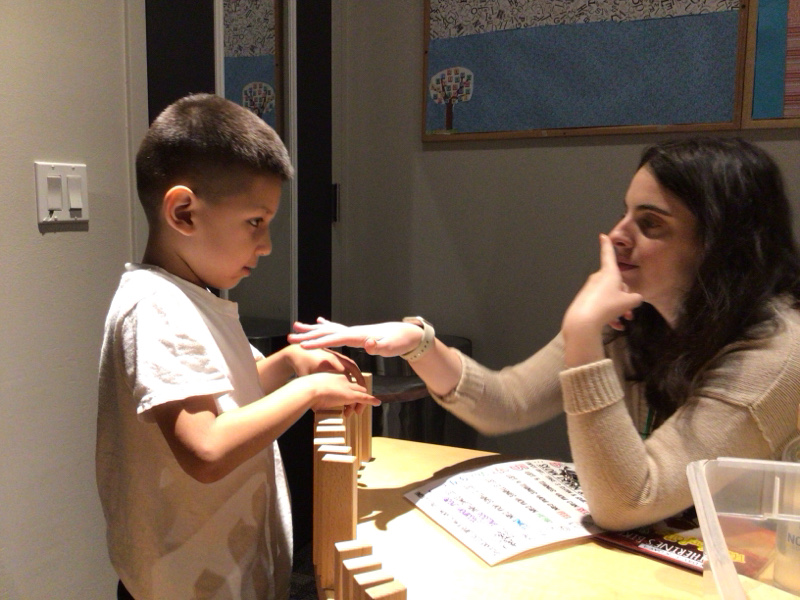
- /p/: Found in words like “pot” and “happy.” Produced by pressing the lips together and releasing a puff of air.
- /b/: Heard in “ball” and “cab.” Made like /p/, but with vocal cord vibration.
- /m/: As in “mom” and “arm.” Created by closing the lips and allowing air through the nose.
- /n/: Seen in “no” and “sun.” The tongue tip touches the area behind the top front teeth.
- /t/: Like “toe” and “kitten.” The tongue tip taps the ridge behind the upper teeth.
- /d/: Heard in “dog” and “bed.” The voiced partner to /t/, sharing the same tongue position.
- /k/: Appears in “cat” and “back.” Made by raising the back of the tongue to the soft palate.
- /g/: As in “go” and “big.” The voiced partner to /k/.
- /w/: Heard in “we” and “away.” Lips are rounded to create this sound.
- /ng/: As in “sing” and “thing.” Produced with the back of the tongue raised and air passing through the nose.
- /f/: Appears in “fun” and “off.” The upper teeth touch the bottom lip while air flows through.
- /y/: Found in “yes” and “beyond.” The middle of the tongue raises toward the hard palate.
Children who are three years old and not yet producing some of the later sounds are usually developing as expected. Early years focus on establishing these simple, foundational consonant sounds.
The Middle Sounds (Age 4)
As articulation skills improve, more complex sounds emerge, resembling the transition from a tricycle to a bicycle with training wheels.
- /l/: As in “light” and “bell.” The tongue tip lifts behind the top teeth.
- /j/: Seen in “yarn” and “juice.” Produced by moving quickly from the /d/ to the /zh/ sound.
- /ch/: Present in “chair” and “watch.” A blend of /t/ and /sh/.
- /s/: Found in “sun” and “miss.” Air flows narrowly over the tongue.
- /v/: Heard in “van” and “have.” The voiced partner to /f/.
- /sh/: Present in “shoe” and “fish.” The tongue is pulled back and lips are rounded.
- /z/: As in “zoo” and “buzz.” The voiced partner to /s/.
At this stage, longer and more complex sentences become common, giving children the means to express a broader range of ideas.
The Later Sounds (Ages 5-6)
Some sounds require more time and precision. Mastery of these sounds might occur earlier in some children or extend to age seven, all within a typical range.
- /r/: In words like “run” and “car.” This sound demands careful tongue placement and tension.
- /zh/: Found in “measure” and “beige.” The voiced counterpart to /sh/.
- /th/ (voiceless): Seen in “thing” and “bath.” The tongue gently slides between the teeth.
- /th/ (voiced): Present in “the” and “mother.” Similar placement, produced with vocal cord vibration.
The most challenging productions—consonant blends such as “str” in “string” or “spl” in “splash”—may solidify only at seven or eight years old. These sounds require rapid, coordinated movements.
Common Speech Sound Patterns and Red Flags
Young children naturally simplify adult speech, using phonological processes to make words easier to produce. For instance, a child might say “nana” for “banana” by omitting an unstressed syllable or “wabbit” for “rabbit” by substituting a simpler sound.
While expected for a time, these patterns should resolve by certain ages. Should they persist, professional attention could be warranted, as lingering phonological processes may interfere with intelligibility.
Red Flags Worth Watching
Specific patterns suggest a need for professional support. Families are encouraged to be proactive if these are observed:
- Leaving Off Final Consonants: When a three-year-old consistently omits ending sounds (for example, “cat” becomes “ca”), this warrants further attention. Final consonants help distinguish between different words.
- Consistent Sound Substitutions: A four-year-old substituting an easier sound for harder ones (such as “tat” for any word beginning with /k/, /g/, /t/, or /d/) indicates a potential underlying pattern in need of assessment.
- Limited Consonant Variety: Reliance on only a few sounds, like /b/, /d/, or /w/, can limit word production. Expanding this variety is necessary for clearer speech.
- Persistent Vowel Errors: Errors with vowels remain common in young children, but by age three, such errors can signal a need for support since vowels are foundational for creating syllables and communicating clearly.
- Noticeable Frustration: If a child often struggles to be understood and frustration builds, it indicates an awareness that speech should be more effective. Emotional distress around communication merits attention.
Concerns in these areas—especially if they impact interactions with peers and other adults—suggest an assessment with a speech-language pathologist could be valuable.
How to Support Speech Sound Development at Home
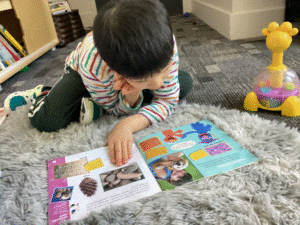
Parents and caregivers serve as a child’s first and most consistent teachers. Thankfully, supporting speech development need not involve drills or flashcards; daily conversations and play offer rich opportunities.
Modeling Beats Correction
Consistent modeling is the most effective strategy for developing speech sounds. When a child says, “Wook at the twuck,” a response like, “Wow, that truck is huge,” provides the correct production in a positive, natural setting. This gives the child repeated exposure to accurate articulation, without pressure or correction.
Frequent corrections or requests to “say it right” can backfire—creating anxiety, making children reluctant to speak, and reducing conversational confidence.
The Power of Reading and Play
Reading stories together introduces children to new vocabulary and sentence patterns while making speech sound practice enjoyable. Emphasizing target sounds in a playful manner, such as, “Look at the slippery, slimy snake,” can reinforce correct production.
Play is not just fun—it serves as purposeful practice for communication skills. Mirroring a child’s interests during play, such as expanding on “The ‘tow’ is big” with, “Yes, the cow is big! The cow says moo,” validates communication while offering correct models for speech.
Avoid the Repetition Trap
Repeatedly asking children to “say it again” often leads to frustration for everyone. Instead, recast sentences by providing the target sound multiple times in meaningful conversation. For example, if a child says, “I see a tat,” respond, “Yes, you see a cat! The cat has orange fur.” This technique incorporates natural reinforcement and builds confidence.
When to Seek Professional Help from a Speech Language Pathologist
Instinct, observation, and ongoing concern are key reasons to pursue professional input. Speech-language pathologists specialize in communication and can provide tailored assessments and recommendations.
Signs It Is Time for an Evaluation
Consider consulting a speech-language pathologist if any of these apply:
- Significant difficulty being understood compared to same-age peers: Noticing a clear difference in intelligibility may mean speech development is not on track.
- Family and familiar listeners often ask for repetition: While occasional requests are expected, regular occurrences beyond age four may suggest a deeper concern.
- Visible frustration or embarrassment about speaking: Some children may withdraw from conversation, speak less, or avoid situations where talking is required. These behaviors should not be ignored.
- Persistent worry from caregivers: When concerns do not ease over time, an evaluation can offer peace of mind or lead to helpful intervention.
A speech-language evaluation includes standardized tests, play-based observations, and a full developmental history. This comprehensive approach paints a holistic picture of a child’s communication needs.
What Does Speech Therapy Look Like?
Speech therapy is appropriate for a range of needs, not only severe speech differences. Early intervention is especially effective. Addressing sound errors at age three or four leads to quicker results, while waiting until kindergarten often means well-established speech habits are harder to change. Early action—like repairing a small crack in a foundation rather than renovating the entire structure—makes a difference.
Why Choose Eyas Landing for Speech Therapy?
Eyas Landing speech-language pathologists provide individualized, natural, and functional support. Child-led therapy involves games, books, and daily activities, so speech practice stays engaging and relevant to the child’s world.
Teams at Eyas Landing work with the entire family, offering specific at-home strategies to reinforce new skills. This collaborative approach helps ensure therapy progress carries over into daily interactions.
Speech sound development is a unique journey for every child. Differences in timing—such as one child speaking clearly at two and another at four—fall within a wide range of normal. Rather than comparing, families benefit from accurate information and trust in their understanding of each child’s needs.
Awareness of speech sound milestones and help-seeking behaviors supports effective communication and confidence. For questions or concerns, professional guidance is always available.
We know that walking into a clinic can sometimes feel intimidating. That is why flexibility is the foundation of our approach. At Eyas Landing, we don’t just treat a diagnosis; we partner with your family.
Our speech-language pathologists (SLPs) are experts in helping children find their voice. We use evidence-based interventions—which simply means we use therapy methods that are proven to work—tailored to your child’s unique strengths.
We offer therapy in the environment where your child learns best:
- In Your Home: Where they feel most comfortable.
- At School/Daycare: To support their social connections.
- In Our Clinic: A specialized environment in Chicago’s West Loop designed for sensory and social growth.
Via TeleHealth: Bringing expert care directly to your living room.
Whether your child needs help articulating sounds, understanding language, or navigating social communication, our multi-disciplinary team is here to support every step of the journey. We look at the whole child, often collaborating with occupational and physical therapists to ensure all your child’s developmental needs are met under one roof.
Take the Next Step
If you have concerns about your child’s speech, trust your instincts. You are expanding your options, not limiting them, by seeking advice.
To get started:
- Contact us to schedule an initial evaluation.
- Meet with our specialists who will listen to your story and observe your child’s unique abilities.
- Collaborate with us to build a plan that fits your family’s life and goals.
Your child’s potential is limitless. Together, we can help them communicate with confidence.
“Eyas” is defined as a young hawk in the developmental stage of learning to fly. At Eyas Landing, it’s not only
about the flight, but also the landing. “As our clients succeed in therapy, they succeed in every aspect of their daily life.”- Dr. Laura Mraz, OTD, OTR/L Founder of Eyas Landing since 2007
Three Birds. One Mission.
Eyas Landing is just one part of your child’s journey! Our sister companies, Blue Bird Day and Merlin Day Academy, work together to support your child as they grow. Blue Bird Day, our therapeutic preschool and kindergarten program, is an intensive rotational therapeutic program designed to provide children ages 2-7 with the tools they need to succeed in a classroom environment. Merlin Day Academy— accredited by the Illinois State Board of Education—provides special education and multi-disciplinary therapy for children ages 6-14 with neuro-diverse learning needs.
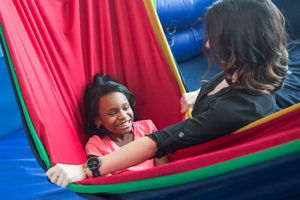
Eyas Landing is a therapy clinic with a mission to provide evidence-based and family-centered therapy services for children, adolescents, and their families. The primary goal is to deliver relationship-based interventions within the most natural environments and to empower families to reach their full potential. To achieve this goal, our highly educated, compassionate staff dedicates time and expertise to create experiences that maximize therapeutic outcomes. The strength, determination, and perseverance of our clients are evident as they succeed in therapy, and ultimately in their daily lives.
Eyas Landing offers a wide range of comprehensive services including Speech Therapy, Occupational Therapy, Physical Therapy, ABA Therapy, Social Work, Family Therapy, and Neuropsych testing. Services are provided throughout the Chicagoland area via Telehealth, In-Home, and in our state of the art clinic.
Want to learn more or you have a specific question? Feel free to connect with us here!