Discrete Trial Teaching (DTT) vs. Natural Environment Teaching (NET): A Guide for Parents
Understanding the vocabulary of the therapy world can feel like trying to assemble furniture with instructions written in a foreign language.
You might hear terms like DTT or NET thrown around during meetings or see them scribbled in a notebook. And it leaves you scratching your head.
Have you ever found yourself nodding along while secretly wondering what was being said. You are definitely not alone. The alphabet soup of Applied Behavior Analysis is real. So, we are here to help you decode it.
At Eyas Landing, we employ ABA but do not believe in a rigid approach to therapy that treats every child the same. We know your child is unique. Their personality and quirks play a huge role in how they learn best.
That is why therapists have different tools in their toolboxes. Two of the big ones used most often are Discrete Trial Teaching and Natural Environment Teaching.
Think of DTT and NET like two different roads to the same destination. Both are designed to help your child learn important skills like talking or playing. However, they take different routes to get there. One is structured and specific. The other is a bit more free flowing and spontaneous.
We will break down exactly what these terms mean and what they look like in real life. We will skip the stiff lectures and robotic definitions. Instead, we will look at this through the lens of what matters most which is your child’s happiness and success.
 What Are DTT and NET?
Discrete Trial Teaching and Natural Environment Teaching are both evidence based strategies used in ABA therapy. While they have their differences, they share a common goal which is teaching your child new skills.
These approaches can be used to teach almost anything. This includes functional communication where we help your child express their wants and needs. It includes social skills like learning how to interact with friends and family.
It covers play skills and figuring out how to use toys. It also includes adaptive skills like mastering daily tasks such as dressing or brushing teeth. Finally, it covers academics like learning colors and numbers.
The therapist determines which approach will click best with your child at that specific moment. Sometimes we need focus and repetition. Other times we need to seize a teachable moment while playing with blocks. Flexibility is the foundation of everything we do. It is rarely just one or the other. It is usually a beautiful blend of both.
Discrete Trial Teaching: The Building Blocks of Learning
Discrete Trial Teaching is a structured way of teaching. Imagine breaking a big skill down into tiny pieces. If you were learning to play the piano, you would not start by playing a whole concerto. You would start by learning where Middle C is located. Then you would practice a scale. DTT applies that concept to therapy.
It involves a therapist working one on one with your child. This usually happens in a setting with minimal distractions. This allows your child to focus entirely on the specific skill they are learning without worrying about the dog barking or the television playing in the background.
What Does DTT Look Like?
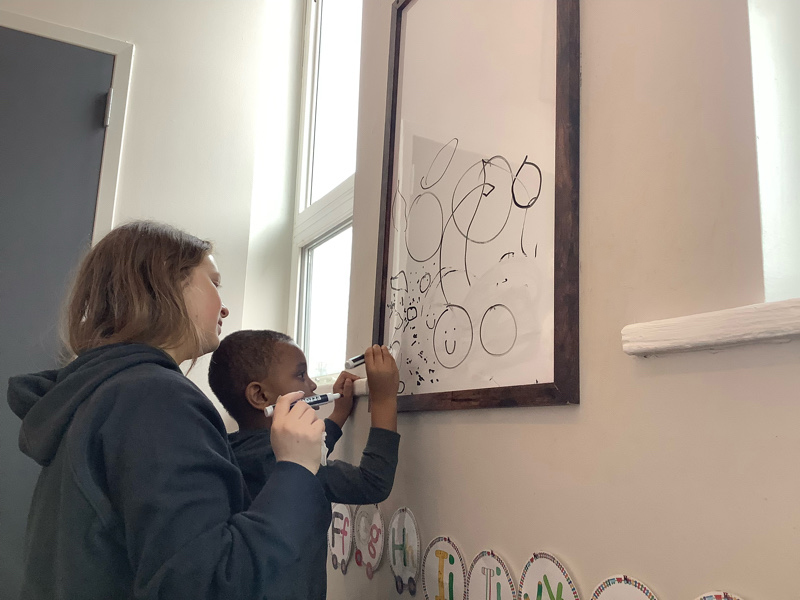
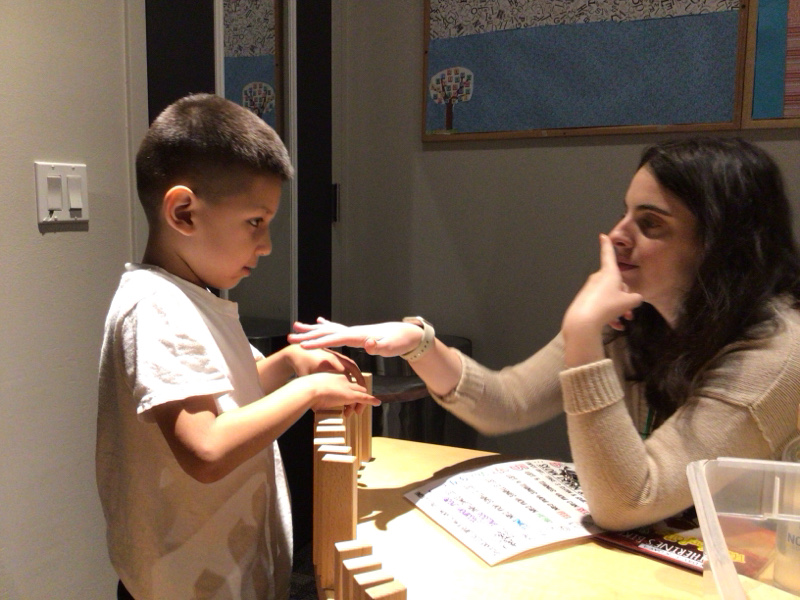
You can do DTT anywhere. It can happen at home or at school. However, it often happens at a table or in a quiet corner on the floor. The key is that the environment is set up for success. We minimize distractions so your child can give their full attention to the task at hand.
In a DTT session, access to preferred items like an iPad is usually restricted until a task is completed. This helps build motivation. First we do the work. Then we get the fun stuff. It creates a clear routine that many children find comforting.
How Does It Work?
DTT relies on repetition. We practice the same small skill over and over again until it sticks. It follows a very specific three step sequence.
The first step is the instruction. The therapist gives a clear and short instruction. For example, let us say we are teaching your child to identify animals. The therapist might place three pictures on the table. The instruction would be to find the dog.
The second step is the response. This is what your child does. They might point to the dog. They might point to the cat. They might just look out the window. Their response determines what happens next.
The third step is the feedback. If they get it right, we celebrate. The therapist provides reinforcement immediately. This tells your child that they did exactly right. If they get it wrong, the therapist provides a prompt to help them get the right answer next time.
We do not punish mistakes. We just correct them gently so the learning continues.
Reinforcement in DTT
The main thing that sets DTT apart is the type of reinforcement we use. In DTT, the reward is often unrelated to the task.
This means the reward does not have to be connected to what they are learning. If your child correctly points to the dog picture, the reward might be blowing bubbles or eating a small piece of candy. The bubbles have nothing to do with the dog. They serve as a paycheck for doing the work. This is incredibly useful when teaching skills that might not be inherently fun for a child like learning to tie shoes.
Why Use DTT?
DTT is powerful because it simplifies learning. For children who get overwhelmed easily, DTT provides a clear structure. It makes it very obvious what is expected of them and exactly when they have succeeded. It builds confidence through repetition.
 Natural Environment Teaching: Learning in the Real World
Natural Environment Teaching is exactly what it sounds like. It is teaching that happens naturally wherever your child is playing or living their life. Instead of sitting at a table with flashcards, the therapist follows your child’s lead.
In NET, we do not set up a structured lesson plan in the same way. Instead, we look for teachable moments that pop up during play or daily routines. It feels less like work and more like fun.
What Does NET Look Like?
NET can happen anywhere your child goes. It happens in the playroom or on the playground. The key is that it happens in the natural setting where the skill would actually be used.
If we are working on requesting items, we do not do it at a desk. We do it while your child is reaching for a toy on a high shelf. If we are working on colors, we do it while coloring a picture or playing with colorful blocks.
How Does It Work?
NET also uses a three step sequence. It looks a little different because it is woven into natural interactions.
The instruction in NET depends on what is happening in the moment. If the therapist and learner are playing catch and the goal is requesting, the therapist might hold the ball and wait.
The response comes from the learner. Ideally, the learner responds by saying they want the ball.
The feedback follows immediately. If the learner asks appropriately, the therapist gives them the ball immediately. If they do not ask, the therapist provides a prompt to help them use their words.
Reinforcement in NET
Here is the big difference. In NET, the reinforcement is specific.
This means the reward is directly related to the task. If the child asks for the ball, they get the ball. They do not get a sticker unless that is naturally part of the game. The reward is the natural outcome of their behavior. This helps children understand why they are learning the skill. They learn that using their words gets them what they want in the real world.
Why Use NET?
NET is fantastic for helping children generalize skills. Generalization is just a fancy word for being able to use a skill in different places.
Sometimes a child learns to identify a picture of a dog at a table but does not realize a real dog in the park is also a dog. NET bridges that gap.
It shows them how to use their skills in real life situations. It is also great for motivation because it follows the child’s interests.
Comparing the Approaches: Which One is Better?
Parents often ask which one is better. Neither is better than the other. They are just different tools for different jobs.
Think about how you learn. Sometimes you need to sit down with a book and study in quiet concentration. That is like DTT. Other times you learn best by just doing the thing. That is like NET.
Your child likely needs both at different times.
DTT is often better for introducing brand new skills. When a skill is completely new, it can be hard to learn it in a chaotic environment. Breaking it down at a table helps the child master the basics first. It builds a strong foundation.
NET is often better for mastering and using those skills. Once the child knows the basics, they need to practice using them in the real world. NET helps them take what they learned at the table and apply it to the playground.
At Eyas Landing, we do not force your child into one box. We look at what they need right now. If they are struggling to focus, we might do some DTT to build attention. If they are getting bored, we might switch to NET to bring the fun back. It is a constant dance of finding what works best for your child in that moment.
 How We Blend Them Together
The magic often happens when we combine these approaches. We might start a session with ten minutes of DTT to work on specific vocabulary. Then we might move to the floor for twenty minutes of NET play where we practice using those same words in a game.
For example, let us say we are teaching the color red.
In DTT, we might sit at the table with cards of different colors. The therapist says to touch red and the child touches the red card. We do this a few times and reward with bubbles. The child learns that the word red matches the color red.
Then we switch to NET. We go play with cars. The therapist says let us race the red car. The child has to find the red car in the bin. If they do, they get to race it. Now they are using their knowledge of red to do something fun.
This combination ensures that your child learns the skill accurately but also understands why it matters. It keeps therapy dynamic and engaging. It prevents boredom.
 The Role of Motivation
Motivation is the engine that drives learning. Without it, we are just spinning our wheels. Both DTT and NET use motivation. They just use it differently.
In DTT, the motivation is often external. The child works because they want the reward that comes after. They might not care about identifying letters. They really want five minutes on the swing. We use the swing to motivate them to learn the letters.
In NET, the motivation is often internal. The child plays because playing is fun. They ask for the ball because they want the ball. The learning is embedded in the activity they already enjoy.
Understanding what motivates your child is a huge part of what we do. Our therapists are detectives. We watch closely to see what makes your child’s eyes light up. We take those interests and turn them into learning opportunities.
Dealing with Challenges
Every child faces challenges in learning. That is normal. The beauty of having both DTT and NET is that we can pivot when things get tough.
Sometimes a child gets frustrated with the repetition of DTT. They might act out or shut down. When that happens, we can switch to NET. We change the scenery. We lower the demands. We focus on play. This can reset the mood and get them back on track.
Other times a child might get too distracted during NET. The playroom might be too exciting. They might be bouncing off the walls and unable to focus on the lesson. In that case, we might move to a quieter area and do a few minutes of DTT to help them regulate and focus.
We are always watching and adjusting. We do not stick to a plan just because it is written down. We stick to what works for your child.
Family Involvement is Key
We know that you are the expert on your child. You know them better than anyone. That is why we want you involved in this process.
You can use these strategies at home too. You do not need to be a certified therapist to use the principles of DTT and NET.
For DTT style learning, you can carve out five minutes a day to practice flashcards or do a puzzle together. Keep it short and sweet. Use lots of praise.
For NET style learning, you can narrate your day. While you are cooking, talk about what you are doing. Ask your child to hand you the big spoon. While you are at the park, point out the colors of the slide. Ask them what they want to do next.
The more you practice these things at home, the faster your child will learn. It creates consistency. It shows your child that learning happens everywhere.
We are here to coach you. If you are not sure how to handle a specific situation, ask us. We can show you how to break down a skill or how to turn a tantrum into a teachable moment. We are partners in this journey.
Common Misconceptions
Some people think DTT creates robots. They worry that children will only be able to answer questions in a specific way. That can happen if DTT is done poorly. Good DTT always includes a plan for generalization. We mix up the questions. We mix up the materials. We ensure the child really understands the concept.
Some people think NET is just playing. They see the therapist on the floor with toys and think they are just babysitting. But NET is highly skilled.
The therapist is constantly analyzing the situation. They are setting up opportunities. They are manipulating the environment to encourage specific behaviors. It looks like play. It is hard work underneath.
Both methods are rigorous and effective when done correctly. At Eyas Landing, we pride ourselves on high quality therapy that respects the child and produces real results.
 When to Start
Parents often wonder when they should start ABA therapy. The research is clear that early intervention is best. The younger the child, the more plastic their brain is. They soak up information like sponges.
However, it is never too late to start. We work with children and adolescents of all ages. Whether your child is two or twelve, we can help them learn new skills and overcome challenges.
If you are seeing signs that your child is struggling with communication or social skills, do not wait. Reach out. An evaluation can give you answers. It can give you a roadmap.
Why Eyas Landing?
We know you have choices when it comes to therapy providers. We believe Eyas Landing is special because of our holistic approach. We do not just look at the behavior. We look at the whole child.
Our team includes not just ABA therapists but also occupational therapists and speech therapists. We collaborate. We talk to each other. If your child is struggling with DTT because of a sensory issue, our OT can step in to help. If they are struggling with NET because of a speech delay, our SLP can provide strategies.
We wrap your family in support. We meet you where you are. We offer services in our clinic, in your home, at school, and via telehealth. We want to make therapy fit your life.
Moving Forward with Confidence
Understanding the difference between DTT and NET gives you power. It helps you understand what you are seeing in therapy sessions. It helps you ask better questions. It helps you advocate for your child.
You do not need to memorize every technical term. You just need to know that there is a plan. There is a logic behind the games and the drills. Every moment of therapy is designed to help your child take the next step forward.
Your child is capable of amazing things. Sometimes they just need the right key to unlock their potential. DTT is one key. NET is another. Together, they open doors to a brighter future.
At Eyas Landing, we are honored to walk this path with you. We celebrate every victory. We are here for the hard days and the great days. We are committed to helping your child soar.
A Final Thought on Flexibility
If there is one thing to take away from all this, it is the importance of flexibility. Your child changes every day. What worked yesterday might not work today. What works at home might not work at school.
That is why rigid programs often fail. You cannot put a growing child into a static box. You have to move with them. You have to adapt.
DTT and NET are not rigid rules. They are flexible frameworks. We stretch them. We combine them. We mold them to fit your child.
This flexibility allows us to serve children with a wide range of needs. From the child who needs intensive support to learn basic words to the adolescent who needs help navigating complex social situations, we have a strategy that fits.
We also know that your family life is dynamic. Your schedule changes. Your priorities shift. We respect that. We work with you to create a therapy schedule that is sustainable. We want therapy to be a helpful part of your life.
Time is Ticking
Waiting is the hardest part. You might think about giving it another month or seeing if things change on their own. But every day that passes without support is a day your child misses out on learning something new. The gap between where they are and where they could be grows a little wider with each delay.
Do not let fear paralyze you. The answers you need are within reach. The support your child deserves is ready and waiting.
We can set up an initial assessment to see where your child is right now. We can talk about your goals. We can build a plan together.
You are not alone in this. There is a whole community here to support you. There are therapists who dedicate their lives to helping kids like yours. There are other parents walking the same road.
Take that step today. Reach out to Eyas Landing. Let us find the right mix of teaching strategies for your unique child. Let us help them build the skills they need to thrive.
Whether it is sitting at a table mastering a puzzle or running on the playground making a new friend, learning is happening. Growth is happening. We are excited to be a part of it.
“Eyas” is defined as a young hawk in the developmental stage of learning to fly. At Eyas Landing, it’s not only
about the flight, but also the landing. “As our clients succeed in therapy, they succeed in every aspect of their daily life.”- Dr. Laura Mraz, OTD, OTR/L Founder of Eyas Landing since 2007
Three Birds. One Mission.
Eyas Landing is just one part of your child’s journey! Our sister companies, Blue Bird Day and Merlin Day Academy, work together to support your child as they grow. Blue Bird Day, our therapeutic preschool and kindergarten program, is an intensive rotational therapeutic program designed to provide children ages 2-7 with the tools they need to succeed in a classroom environment. Merlin Day Academy— accredited by the Illinois State Board of Education—provides special education and multi-disciplinary therapy for children ages 6-14 with neuro-diverse learning needs.


Eyas Landing is a therapy clinic with a mission to provide evidence-based and family-centered therapy services for children, adolescents, and their families. The primary goal is to deliver relationship-based interventions within the most natural environments and to empower families to reach their full potential. To achieve this goal, our highly educated, compassionate staff dedicates time and expertise to create experiences that maximize therapeutic outcomes. The strength, determination, and perseverance of our clients are evident as they succeed in therapy, and ultimately in their daily lives.
Eyas Landing offers a wide range of comprehensive services including Speech Therapy, Occupational Therapy, Physical Therapy, ABA Therapy, Social Work, Family Therapy, and Neuropsych testing. Services are provided throughout the Chicagoland area via Telehealth, In-Home, and in our state of the art clinic.
Want to learn more or you have a specific question? Feel free to connect with us here!