Applying ABA in Environments: A Guide for Parents and Caregivers
When you hear “ABA” (Applied Behavior Analysis), your mind might jump straight to autism and behavior charts. While that’s part of the story, it’s definitely not the whole picture.
Think of ABA less like a rigid set of rules and more like a toolkit for understanding why we do what we do. It’s about building skills—fine motor, gross motor, play, and adaptive skills—that help kids navigate the world with confidence.
The best part? ABA isn’t stuck in a clinic. It’s portable. You can use these strategies at the kitchen table, in the classroom, at the park, or even during a chaotic trip to the grocery store. The goal is to help your child generalize skills—which is just a fancy way of saying they can use what they’ve learned anywhere, not just when a therapist is watching.
Let’s break down how you can take these principles off the paper and into real life, making your day-to-day interactions smoother and more meaningful.
 Understanding the “Why”: The Functions of Behavior
Have you ever looked at your child and thought, “Why are they doing that?” You are definitely not alone. It can feel like a mystery, but behavior usually boils down to four simple reasons, or “functions.” If we can figure out the why, we can figure out how to help.
These four functions act like a compass. Once you know where the behavior is pointing, you can steer the ship in the right direction.
Attention: “Look at Me!”
This is a big one. Sometimes, a child acts out because they want social interaction. It doesn’t even have to be good interaction. To a child, being scolded is sometimes better than being ignored.
- What it looks like: Your child might yell, make silly noises, or throw a toy right when you pick up the phone.
- Real-life example: Imagine you are cooking dinner. Your child starts banging a spoon loudly on the table. You turn around and say, “Stop that!” You just gave them attention. Even though you were correcting them, they got what they wanted: your eyes and your voice.
- The Fix: Catch them being good! It sounds cheesy, but it works. If they are playing quietly with the spoon instead of banging it, say, “I love how gently you are playing while I cook.” Fill their “attention cup” before it runs empty.
Escape: “I Want Out!”
This function is all about getting away from something they don’t like. It could be a difficult math problem, a loud room, or a plate of broccoli.
- What it looks like: A child might flop to the floor, run away, or rip up a worksheet when asked to do homework.
- Real-life example: It’s time to brush teeth. Your child starts crying and hiding under the bed. If you say, “Okay, fine, we can skip it tonight,” they have learned that hiding works to escape the task.
- The Fix: Teach them to ask for a break. If the task is too hard, show them how to say (or sign), “I need help” or “I need a break.” We want to teach them that using words gets them relief faster than hiding under the bed does.
Sensory: “It Feels Good”
Sometimes, the behavior itself is the reward. It just feels good, sounds interesting, or looks cool to the child. This is often called “automatic reinforcement” because it doesn’t depend on anyone else.
- What it looks like: Hand flapping, rocking back and forth, humming, or spinning in circles.
- Real-life example: Your child might tap a pencil rhythmically against their ear. They aren’t doing it to annoy you or get out of work; they just like the vibration or the sound.
- The Fix: This one is tricky because you can’t exactly “remove” the feeling they get. Instead, try to find a replacement that meets that same sensory need but is safer or more appropriate. If they like visual stimulation, maybe a kaleidoscope or a light-up toy would work. If they like pressure, a weighted blanket might help.
Tangible: “I Want That Thing”
This is the most straightforward one. The child wants access to a specific item or activity—a cookie, the iPad, a favorite toy.
- What it looks like: Crying in the candy aisle, grabbing a toy from a sibling, or refusing to leave the park.
- Real-life example: You are at the checkout line, and your child screams for a candy bar. To quiet them down, you buy the candy bar. You have just taught them that screaming is the currency used to buy candy.
- The Fix: Teach them to ask nicely or to wait. “First we load the car, then you can have a snack.” We want them to understand that communication, not chaos, is the key to unlocking the things they want.
 The Magic of Positive Reinforcement
Now that we know why behaviors happen, let’s talk about how to encourage the behaviors we do want. Enter positive reinforcement. This is the bread and butter of ABA, and honestly, it’s a game-changer for parenting in general.
The concept is simple: Behaviors that get rewarded get repeated.
Think about your job. You go to work because you get a paycheck. If the paycheck stopped coming, you’d probably stop going. Kids are the same way. They need a “paycheck” for their hard work, whether that work is tying their shoes, sharing a toy, or sitting calmly at dinner.
Catch Them Being Good
We often spend so much time correcting the things that go wrong (“Don’t hit,” “Stop running,” “Quiet down”) that we forget to mention the things going right.
If a student raises their hand instead of shouting out the answer, reinforce that immediately! You could give them a high-five, a sticker, or just enthusiastic verbal praise: ” high five for raising your hand! I love how you waited for your turn.”
By reinforcing the hand-raising every single time, you are building a habit. Slowly but surely, the shouting will decrease because it’s no longer the thing that gets the reward. The hand-raising becomes the new “winning” strategy.
Types of Reinforcers
Reinforcement isn’t just candy. In fact, relying only on food can be tricky. Mix it up!
- Social Reinforcement: High-fives, tickles, praise (“You did it!”), smiles, and hugs.
- Activity Reinforcement: Extra time on the swing, getting to pick the music in the car, reading a special book, or going for a walk.
- Tangible Reinforcement: Stickers, tokens, small toys, or yes, occasionally a small treat.
Pro-Tip: The reinforcement needs to match the effort. If your child puts their plate in the sink, a “Good job!” is perfect. If they finish a massive, difficult homework project without a meltdown, that might deserve 15 minutes of video game time.
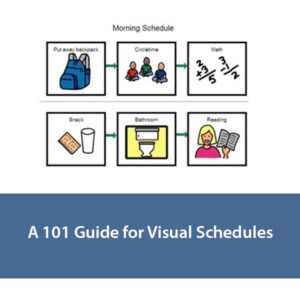 Visuals: Seeing is Believing (and Understanding)
We live in a very auditory world. We talk, we give instructions, we ask questions. But for many children, words disappear into the air the second they are spoken. Visuals are permanent. They stay right there, helping your child process information at their own speed.
Every student learns differently. Some are auditory learners, but many are visual or tactile learners. Relying only on your voice might mean your message is getting lost in translation.
Why Visuals Work
Imagine you are in a foreign country where you don’t speak the language. Someone is shouting directions at you, but you are lost. Then, they pull out a map and point to where you need to go. Instantly, your anxiety drops. You understand.
That is what visuals do for kids. They reduce anxiety because they make expectations clear. A picture really is worth a thousand words.
Types of Visuals to Try
- Visual Schedules: A simple strip of pictures showing the order of the day. “Breakfast -> Get Dressed -> Brush Teeth -> School.” This helps kids know what is coming next, which reduces the fear of the unknown.
- Choice Boards: If your child struggles to speak when they are upset, a board with pictures of their favorite snacks or activities can help them communicate without the pressure of finding words.
- Task Strips: Break a complex task down. “Washing Hands” might have pictures for: Turn on water -> Soap -> Scrub -> Rinse -> Dry.
- Stop/Go Signs: Put a red stop sign on doors they shouldn’t open or on the fridge if it’s not snack time. It’s a silent reminder that saves you from having to say “No” fifty times a day.
Having a visual allows students to reference back to it when they are uncertain. It builds independence because they don’t have to ask you; they can just look at the picture.
The Premack Principle: Grandma’s Rule
You might not know the name “Premack Principle,” but you definitely know the concept. It’s often called “Grandma’s Rule”: You have to eat your veggies before you get dessert.
In ABA terms, it’s a “First, Then” statement. We use a high-probability behavior (something they want to do) to reinforce a low-probability behavior (something they have to do).
How to Use It
The structure is always: “First [Task], Then [Reward].”
- “First we write, Then we draw.”
- “First clean up toys, Then go outside.”
- “First three bites of chicken, Then iPad.”
This simple structure changes the dynamic. You aren’t the bad guy taking away the fun; you are the gatekeeper showing them how to earn the fun. The reward is right there, waiting for them. It motivates them to push through the hard stuff.
Following Through is Key
Here is the catch: You must follow through. If you say, “First clean up, then park,” and they refuse to clean up but you take them to the park anyway because you’re tired of fighting… the principle breaks. They learn that your words don’t mean much.
Even if it requires you to model or guide them hand-over-hand to put the toys away, ensure the “First” happens before the “Then.” By following through with the demand, you are teaching the individual that they can trust you. They learn that when you say something will happen, it happens. This consistency creates a feeling of safety.
 Generalizing Skills: Taking it on the Road
Okay, so you’ve got these great strategies—functions of behavior, positive reinforcement, visuals, and “First/Then.” Now, let’s talk about environment.
One of the biggest challenges for kids with developmental differences is “generalization.” A child might learn to tie their shoes on a practice board in a quiet room, but completely forget how to do it on their actual sneakers in a noisy gym locker room.
We want our kids to be flexible. We want them to succeed not just at home, but everywhere.
In the Home
Home is the safe zone, but it’s also the chaotic zone. It’s where the morning rush happens, where siblings fight, and where bedtime battles occur.
- Routine is your friend. Use visual schedules for morning and evening routines. Post them on the bathroom mirror or the fridge.
- Natural Reinforcement. Use the natural rewards of home life. If they put their dirty clothes in the hamper, the natural reward is a clean room (though they might not care about that yet!). Better yet, if they get ready quickly, they have 5 extra minutes to play with the dog before school.
- Sibling Power. If you have other children, get them involved! Siblings make great models. Praise the sibling for sharing, and your child will likely copy them to get that same praise.
At School
School is a different beast. There are more rules, more noise, and less individual attention.
- Communication is vital. Share what works at home with the teacher. If a “First/Then” board works magic for homework, let the teacher know so they can try it for classwork.
- Advocate for breaks. If you know your child functions behavior is “Escape” when things get loud, ask if there is a quiet corner in the classroom they can retreat to for a reset.
- Social Skills. School is the prime spot for working on social attention. Teachers can facilitate games where peers give high-fives or praise, helping your child learn that positive attention from friends feels great.
In the Community
This is the advanced level! The grocery store, the dentist, the birthday party. These places are unpredictable.
- Prepare ahead of time. Before you go to the dentist, look at pictures of a dentist’s office. Read a book about it. “First we open our mouth, then we get a prize from the treasure chest.”
- Bring your tools. Don’t leave your visuals at home. Have a small “First/Then” card in your purse or pocket.
- Start small. Don’t try to generalize a new skill in a high-stress environment right away. If they are learning to walk calmly beside you, practice on a quiet sidewalk first, not in a crowded mall on a Saturday.
Navigating Challenges with Patience
Let’s be real for a second. Reading about these strategies is easy. Doing them at 5:00 PM when you are exhausted and your child is screaming is hard.
There will be days when the “First/Then” doesn’t work. There will be days when you accidentally reinforce a tantrum because you just need five minutes of peace. That is okay. You are human.
Learning new skills or changing a behavior takes time. It’s a marathon, not a sprint. You are rewiring habits—both yours and your child’s.
The “Extinction Burst”
There is a concept in ABA called an “extinction burst.” It basically means: It often gets worse before it gets better.
If you stop giving attention to a behavior that used to work (like screaming for candy), your child might scream louder at first. They are thinking, “Hey! This usually works! Maybe she didn’t hear me!” They amp up the volume to try to get that old result.
If you give in during the burst, you teach them that “louder screaming works.” But if you stay strong and ride out the storm, the behavior will eventually drop off. Knowing this is coming can help you stay calm when the volume goes up.
 You Are the Expert on Your Child
While ABA provides the scientific framework—the data, the strategies, the principles—you provide the heart. You know what makes your child laugh. You know which stuffed animal is the favorite. You know the difference between their “I’m tired” cry and their “I’m mad” cry.
The goal of applying ABA in various environments isn’t to turn you into a therapist. It’s to give you a common language to use with your child. It empowers you to handle the tricky moments with a plan rather than just reacting.
With these few tricks—understanding functions, using reinforcement, trying visuals, and applying “First/Then”—you can help your child grow and succeed. It helps educators and parents understand children’s actions not as “bad behavior,” but as communication that just needs a little translation.
Remember to be positive and patient. Celebrate the small wins. Did they wait 5 seconds without interrupting? That’s a win! Did they use a picture to ask for water instead of whining? Huge victory!
These moments add up. Over time, you build a foundation of trust and understanding that helps your child navigate the world—whether that’s the classroom, the living room, or the playground—with confidence and joy.
“Eyas” is defined as a young hawk in the developmental stage of learning to fly. At Eyas Landing, it’s not only
about the flight, but also the landing. “As our clients succeed in therapy, they succeed in every aspect of their daily life.”- Dr. Laura Mraz, OTD, OTR/L Founder of Eyas Landing since 2007
Three Birds. One Mission.
Eyas Landing is just one part of your child’s journey! Our sister companies, Blue Bird Day and Merlin Day Academy, work together to support your child as they grow. Blue Bird Day, our therapeutic preschool and kindergarten program, is an intensive rotational therapeutic program designed to provide children ages 2-7 with the tools they need to succeed in a classroom environment. Merlin Day Academy— accredited by the Illinois State Board of Education—provides special education and multi-disciplinary therapy for children ages 6-14 with neuro-diverse learning needs.

Eyas Landing is a therapy clinic with a mission to provide evidence-based and family-centered therapy services for children, adolescents, and their families. The primary goal is to deliver relationship-based interventions within the most natural environments and to empower families to reach their full potential. To achieve this goal, our highly educated, compassionate staff dedicates time and expertise to create experiences that maximize therapeutic outcomes. The strength, determination, and perseverance of our clients are evident as they succeed in therapy, and ultimately in their daily lives.
Eyas Landing offers a wide range of comprehensive services including Speech Therapy, Occupational Therapy, Physical Therapy, ABA Therapy, Social Work, Family Therapy, and Neuropsych testing. Services are provided throughout the Chicagoland area via Telehealth, In-Home, and in our state of the art clinic.
Want to learn more or you have a specific question? Feel free to connect with us here!