Understanding Your Child’s Voice: A Guide to Speech Development Milestones
Every parent eagerly awaits those first magical sounds—the coos, the babbles, and eventually, that first clear word. But in the quiet moments between those achievements, it is natural to worry. You might find yourself comparing your child to a cousin of the same age or searching online late at night, wondering if your child is on track.
At Eyas Landing, we understand how overwhelming this can feel. Your concerns are valid, and you are not alone in navigating this journey.
Speech development is more than just a checklist of skills; it is how your child connects with you and the world around them. While every child develops at their own unique pace, understanding key milestones can help you recognize their progress and know when they might need a little extra support.
Why Milestones Matter
Think of developmental milestones as road signs on your child’s journey. They give us a general idea of what skills most children learn by a certain age.
These markers are important because speech and language are the foundation for so much of your child’s future—their ability to make friends, succeed in school, and express their feelings. When we spot a delay early, we can step in with support that makes a real difference.
However, it is vital to remember that a “milestone” is an average, not a deadline. Some children sprint ahead in motor skills like walking but take their time with talking. Others might be chatterboxes who sit still. Our goal is to look at the whole picture of your child’s development.
Key Speech Milestones: What to Look For
Here is a guide to the typical stages of speech development. Remember, these are general windows of time.
2–3 Months: The Beginning of Connection
Long before they say a word, your baby is learning to communicate.
- Cooing: You will likely hear soft vowel sounds like “ooh” and “aah.”
- Reacting: Your baby should smile at the sound of your voice and quiet down when you speak to them.
- Crying changes: You might start to notice different cries for different needs—one for hunger, one for pain, and one for being tired.
6–7 Months: The Babbling Stage
This is often a fun and noisy phase where your child discovers their voice.
- Babbling: Listen for repeated sounds like “ba-ba” or “ma-ma.” They aren’t attaching meaning to these words yet, but they are practicing the movements.
- Vocal Play: Your child might make gurgling sounds or blow raspberries.
- Responding to Tone: They may react differently if your voice sounds angry versus friendly.
12 Months: The First Words
This is a major turning point that parents cherish.
- Meaningful Words: Most children say one or two words with meaning, like “dada,” “mama,” or “uh-oh.”
- Understanding: They can typically follow simple commands like “come here” or understand words for common items like “cup” or “shoe.”
- Imitation: They try to copy speech sounds they hear you make.
24 Months: Putting It Together
By age two, language usually explodes.
- Combining Words: You will hear simple two-word phrases like “more juice,” “mommy go,” or “big truck.”
- Vocabulary Growth: They likely use 50 or more words regularly.
- Being Understood: As a parent, you should understand about 50% of what they say, even if strangers cannot.
Signs That Might Indicate a Delay
As you watch your child grow, you know them best. If your gut tells you something is different about your child’s communication, it is worth exploring. Sometimes, children need a specialized approach to unlock their speech potential.
Here are some signs that a professional evaluation might be helpful:
- Limited Eye Contact: Difficulty looking at you when you are playing or talking together.
- Few Gestures: By 12 months, if your child isn’t pointing, waving bye-bye, or reaching to be picked up.
- Echolalia: This is when a child repeats words or phrases exactly as they hear them (like lines from a movie) without using them to communicate a specific thought. While some repetition is normal, frequent echolalia can be a sign of a developmental difference.
- Trouble Following Directions: Struggling to understand simple requests like “get your shoes” without you pointing to them.
- Unusual Voice Quality: A voice that sounds consistently raspy, nasal, or very loud/soft.
- Stuttering: Repeating sounds or words (like “b-b-b-ball”) that persists longer than a few months or seems to frustrate your child.
How You Can Support Speech at Home
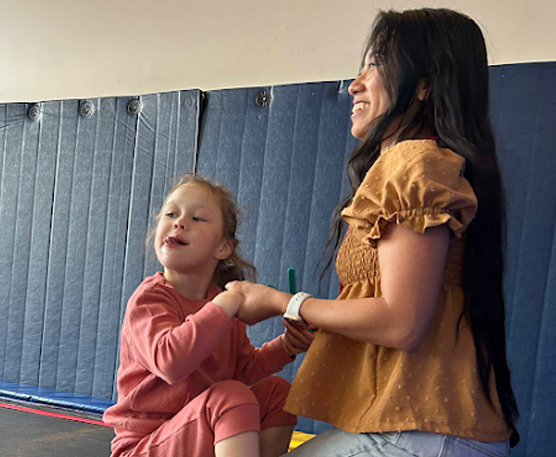
You are your child’s first and best teacher. You don’t need expensive equipment to build language skills—just your time and attention. Here are simple, actionable ways to help:
Narrate Your Day
Talk about what you are doing as you do it. “I am pouring the milk. The milk is cold. Now we drink.” This bathes your child in language and connects words to actions.
Read Together Daily
Reading isn’t just for bedtime. Point to pictures and name them. Ask questions like, “Where is the dog?” even if they can’t answer yet. Pause and let them turn the page.
Get Down on Their Level
Sit on the floor so you are face-to-face. This helps your child see your mouth move and makes them feel more connected to you.
Wait for a Response
When you ask a question or talk to your child, pause for 5–10 seconds. It takes young children longer to process what they heard and decide how to respond. Giving them that extra quiet moment can encourage them to try speaking.
When to Seek Professional Help
If your child isn’t meeting these milestones, or if you feel like their progress has stalled, we encourage you to reach out. It is never too early to ask questions.
Early intervention is powerful. Research consistently shows that the earlier we support a child’s speech and language development, the better the long-term outcomes.
The Eyas Landing Difference: Meeting You Where You Are
We know that walking into a clinic can sometimes feel intimidating. That is why flexibility is the foundation of our approach. At Eyas Landing, we don’t just treat a diagnosis; we partner with your family.
Our speech-language pathologists (SLPs) are experts in helping children find their voice. We use evidence-based interventions—which simply means we use therapy methods that are proven to work—tailored to your child’s unique strengths.
We offer therapy in the environment where your child learns best:
- In Your Home: Where they feel most comfortable.
- At School/Daycare: To support their social connections.
- In Our Clinic: A specialized environment in Chicago’s West Loop designed for sensory and social growth.
- Via TeleHealth: Bringing expert care directly to your living room.
Whether your child needs help articulating sounds, understanding language, or navigating social communication, our multi-disciplinary team is here to support every step of the journey. We look at the whole child, often collaborating with occupational and physical therapists to ensure all your child’s developmental needs are met under one roof.
Take the Next Step
If you have concerns about your child’s speech, trust your instincts. You are expanding your options, not limiting them, by seeking advice.
To get started:
- Contact us to schedule an initial evaluation.
- Meet with our specialists who will listen to your story and observe your child’s unique abilities.
- Collaborate with us to build a plan that fits your family’s life and goals.
Your child’s potential is limitless. Together, we can help them communicate with confidence.
“Eyas” is defined as a young hawk in the developmental stage of learning to fly. At Eyas Landing, it’s not only
about the flight, but also the landing. “As our clients succeed in therapy, they succeed in every aspect of their daily life.”- Dr. Laura Mraz, OTD, OTR/L Founder of Eyas Landing since 2007
Three Birds. One Mission.
Eyas Landing is just one part of your child’s journey! Our sister companies, Blue Bird Day and Merlin Day Academy, work together to support your child as they grow. Blue Bird Day, our therapeutic preschool and kindergarten program, is an intensive rotational therapeutic program designed to provide children ages 2-7 with the tools they need to succeed in a classroom environment. Merlin Day Academy— accredited by the Illinois State Board of Education—provides special education and multi-disciplinary therapy for children ages 6-14 with neuro-diverse learning needs.
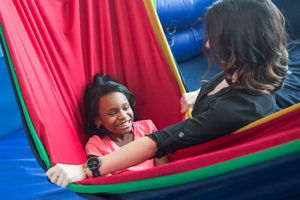
Eyas Landing is a therapy clinic with a mission to provide evidence-based and family-centered therapy services for children, adolescents, and their families. The primary goal is to deliver relationship-based interventions within the most natural environments and to empower families to reach their full potential. To achieve this goal, our highly educated, compassionate staff dedicates time and expertise to create experiences that maximize therapeutic outcomes. The strength, determination, and perseverance of our clients are evident as they succeed in therapy, and ultimately in their daily lives.
Eyas Landing offers a wide range of comprehensive services including Speech Therapy, Occupational Therapy, Physical Therapy, ABA Therapy, Social Work, Family Therapy, and Neuropsych testing. Services are provided throughout the Chicagoland area via Telehealth, In-Home, and in our state of the art clinic.
Want to learn more or you have a specific question? Feel free to connect with us here!