Infant torticollis is far more common than most Chicago parents realize. One day you can be admiring your baby’s sweet little face, and the next you notice they are always tilting their head to the same side or are struggling to turn evenly.
You sometimes even notice they seem uncomfortable moving their head during tummy time.
These early signs often point to congenital muscular torticollis (CMT). This condition is marked by tightness in the neck muscles that causes the head to tilt or rotate in a locked position.
While torticollis can affect individuals of any age, it’s especially important to identify and treat it early in infancy.
In Chicago, pediatricians and physical therapists are seeing a steady rise in congenital muscular torticollis diagnoses — but the good news is that early physical therapy is highly effective.
Research shows that infants who begin treatment in the first months of life experience significant improvements in neck mobility, symmetry, and motor development.
One therapeutic approach gaining significant attention among Chicago families and clinicians is Total Motion Release (TMR) Tots Physical Therapy. This is a gentle, whole‑body method designed specifically for infants.
This article explores what TMR Tots PT is, why it works, and how it supports infants with torticollis in achieving healthy, symmetrical development.
If you would like more personal insights, please contact us today! We’re here to support you every step of the way.
Understanding Infant Torticollis
Before diving into TMR Tots PT, it’s important to understand what torticollis is and how it affects infants.
What Is Congenital Muscular Torticollis (CMT)?
CMT occurs when one of the neck muscles — typically the sternocleidomastoid (SCM) — becomes tight or shortened. This leads to:
- A consistent head tilt
- A preference for looking to one side
- Difficulty turning the head evenly
- Flattening on one side of the head (positional plagiocephaly)
- Challenges with tummy time
- Delays in motor milestones
Left untreated, torticollis can affect crawling, sitting, rolling, and even early standing and walking patterns. Because infants learn through movement, asymmetry in the neck can create a ripple effect throughout the body.
Why Early Intervention Matters
Chicago pediatric therapists consistently emphasize that the earlier torticollis is treated, the better the outcomes. Infants’ muscles are highly adaptable, and early therapy can:
- Improve range of motion
- Prevent asymmetrical development
- Support healthy motor milestones
- Reduce the need for more intensive interventions later
This is where TMR Tots PT shines.
The Role of Physical Therapy in Treating Torticollis
Physical therapy is the gold standard for treating infant torticollis. Traditional PT typically includes:
- Gentle stretching
- Positioning strategies
- Strengthening exercises
- Tummy time modifications
- Parent education
These approaches are effective, but some infants benefit from a more holistic method — one that looks beyond the neck and considers the entire body’s movement patterns. That’s exactly what TMR Tots PT offers.
What Is TMR Tots Physical Therapy?
Total Motion Release (TMR) is a therapeutic approach originally developed for adults, focusing on restoring balance and function by addressing asymmetries throughout the body. Over time, clinicians adapted the method for infants and young children, creating TMR Tots PT.
Key Principles of TMR Tots PT
- The body works as an interconnected system
- Restrictions in one area can affect movement elsewhere
- Gentle, whole‑body movements can improve alignment
- Treating the “easy” side can help the “tight” side release
- Therapy should be comfortable, calming, and child‑led
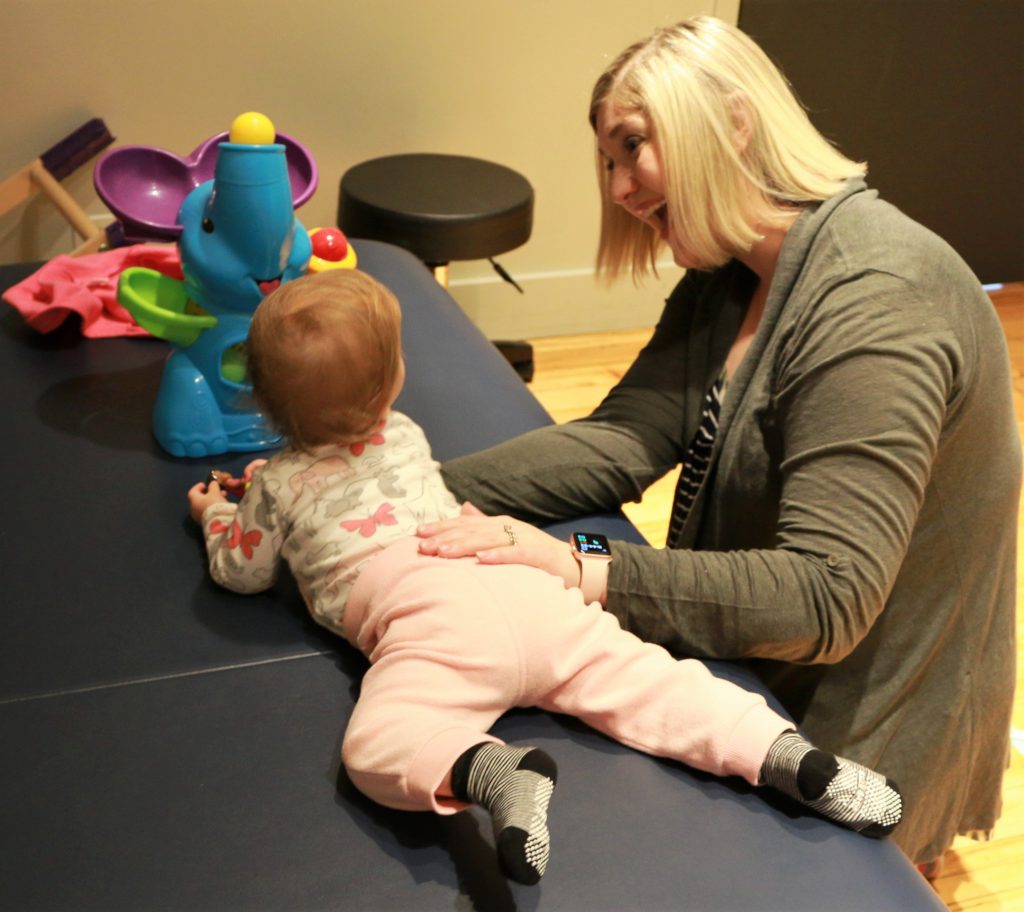
Unlike traditional stretching, TMR Tots PT uses gentle, non‑invasive movements that feel natural to infants. It focuses on improving overall symmetry rather than only targeting the neck.
Why TMR Tots PT Is Effective for Infant Torticollis
Families across Chicago are turning to TMR Tots PT because it offers a unique, holistic approach to treating torticollis. Here’s why it works so well.
1. A Gentle, Infant‑Friendly Approach
Infants respond best to calm, soothing, and gentle interventions. TMR Tots PT avoids forceful stretching and instead uses:
- Soft, guided movements
- Comfortable positions
- Slow, rhythmic motions
This makes therapy sessions more enjoyable for babies and less stressful for parents.
2. Individualized Treatment Plans
No two infants with torticollis present exactly the same way. Some have tightness on one side of the neck, others have full‑body asymmetries, and many have accompanying challenges such as:
- Plagiocephaly
- Reflux
- Hip tightness
- Shoulder restrictions
TMR Tots PT tailors treatment to each child’s unique needs, ensuring that therapy addresses the root cause — not just the symptoms.
3. A Whole‑Body Perspective
One of the biggest advantages of TMR Tots PT is its holistic approach. Instead of focusing solely on the neck, therapists examine:
- Spine alignment
- Hip mobility
- Shoulder symmetry
- Core strength
- Overall movement patterns
This is especially important because torticollis often affects more than just the neck. Babies may compensate with their trunk, hips, or shoulders, creating additional imbalances. TMR Tots PT helps restore harmony throughout the body.
4. Strong Parent Involvement
Parents are essential partners in TMR Tots PT. Therapists teach caregivers simple, gentle techniques they can use at home during:
- Diaper changes
- Playtime
- Feeding
- Tummy time
- Bedtime routines
This empowers families and ensures that progress continues between sessions.
Chicago parents often appreciate that TMR Tots PT techniques are easy to integrate into daily life — no complicated equipment or stressful routines required.
5. Promising Outcomes and Growing Clinical Support
While more research is needed to build a robust evidence base, early studies and clinical observations show promising results. Many families report:
- Improved head turning
- Better symmetry
- Reduced fussiness
- Enhanced motor development
- Faster progress compared to stretching alone
Clinicians across Chicago are increasingly incorporating TMR Tots PT into their treatment plans because of its gentle nature and whole‑body effectiveness.
How TMR Tots PT Sessions Work
A typical TMR Tots PT session at a Chicago pediatric therapy clinic like Eyas Landing may include:
Assessment
- Observing head position
- Checking range of motion
- Assessing muscle tone
- Evaluating full‑body symmetry
Gentle Movement Techniques
- Guided motions that release tension
- Whole‑body exercises that support alignment
- Infant‑led positioning
Parent Coaching
- Demonstrating home techniques
- Teaching positioning strategies
- Providing tummy time modifications
Progress Monitoring
- Tracking symmetry
- Adjusting the plan as the baby grows
- Ensuring milestones stay on track
The goal is always to support the infant’s comfort, development, and long‑term musculoskeletal health.
Why Choose TMR Tots PT?
Chicago parents are increasingly seeking out TMR Tots PT for several reasons:
1. It’s gentle and baby‑friendly
No forceful stretching. No tears. Just calm, effective movement.
2. It fits naturally into daily routines
Parents can practice techniques during everyday activities.
3. It supports whole‑body development
This is especially important for babies with multiple areas of tightness.
4. It complements traditional PT
Many Chicago therapists use TMR Tots PT alongside conventional methods for optimal results.
5. It empowers parents
Families feel confident, informed, and actively involved in their baby’s progress.
The Importance of Early Intervention
Chicago’s pediatric therapy community strongly emphasizes early identification and treatment of torticollis. With the city’s diverse population and busy family schedules, having access to effective, family‑centered therapy approaches like TMR Tots PT is essential.
Early intervention helps:
- Prevent long‑term asymmetry
- Support healthy motor development
- Reduce the need for helmets for plagiocephaly
- Improve feeding and positioning
- Enhance comfort and mobility
The sooner therapy begins, the easier it is to correct muscle imbalances and support symmetrical growth.
Eyas Landing
Eyas Landing is proud to serve Chicago families with a comprehensive, multidisciplinary approach to pediatric therapy. Our mission is to provide evidence‑based, family‑centered, relationship‑driven care that empowers children and their caregivers.
Our highly trained physical therapists integrate approaches like TMR Tots PT with traditional pediatric PT techniques to support infants with torticollis.
We collaborate closely with families, pediatricians, and Early Intervention providers to ensure each child receives the individualized care they deserve.
Eyas Landing offers a full range of services, including:
- Physical Therapy
- Occupational Therapy
- Speech‑Language Therapy
- ABA Therapy
- Feeding Therapy
- Social Work & Counseling
- Early Intervention Services
- Individualized Intensives
Our goal is simple: Help every child reach their fullest potential through compassionate, expert care.
A Promising Path Forward
TMR Tots Physical Therapy offers a gentle, effective, and family‑centered approach to treating infant torticollis. By addressing the whole body, empowering parents, and promoting symmetrical development, TMR Tots PT supports infants in building strong foundations for movement, comfort, and motor milestones.
For Chicago families navigating a new torticollis diagnosis, early intervention and the right therapeutic support can make all the difference.
With approaches like TMR Tots PT — and the guidance of experienced pediatric therapists — infants can achieve healthy alignment, improved mobility, and a brighter developmental future.
If you would like more personal insights, please contact us today! We’re here to support you every step of the way.
Frequently Asked Questions About TMR Tots Physical Therapy for Infant Torticollis
Where can Chicago families find support for infant torticollis?
Chicago families can connect with a pediatric physical therapist who understands infant development and offers family-centered care. Early intervention can make a meaningful difference by improving comfort, supporting more balanced movement, and helping babies build the skills they need for future milestones.
What can parents expect during TMR Tots Physical Therapy?
Parents can expect a gentle, supportive process that focuses on their baby's comfort, movement, and overall development. Sessions often include guided positioning, whole-body movement activities, and simple coaching so families can carry strategies into daily routines like feeding, playtime, and tummy time.
When should I seek physical therapy for infant torticollis?
If you notice your baby consistently tilting their head, favoring one side, or struggling with tummy time, it's a good idea to speak with your pediatrician or a pediatric physical therapist as soon as possible. Early support can help improve range of motion, encourage more balanced development, and make everyday activities more comfortable for your baby.
How do I know if my baby might have torticollis?
Common early signs include a head tilt to one side, a preference for looking in one direction, trouble turning the head evenly, or discomfort during tummy time. A pediatric physical therapist can evaluate your baby's movement patterns and determine whether TMR Tots Physical Therapy may help support more balanced, comfortable movement.
This post was originally published in March 2024 and was rewritten in June 2026 to include updated strategies.

Eyas Landing is a therapy clinic with a mission to provide evidence-based and family-centered therapy services for children, adolescents, and their families. The primary goal is to deliver relationship-based interventions within the most natural environments and to empower families to reach their full potential. To achieve this goal, our highly educated, compassionate staff dedicates time and expertise to create experiences that maximize therapeutic outcomes. The strength, determination, and perseverance of our clients are evident as they succeed in therapy, and ultimately in their daily lives.
Eyas Landing offers a wide range of comprehensive services including Speech Therapy, Occupational Therapy, Physical Therapy, ABA Therapy, Social Work, Family Therapy, and Neuropsych testing. Services are provided throughout the Chicagoland area via Telehealth, In-Home, and in our state of the art clinic.
Want to learn more or you have a specific question? Feel free to connect with us here!