What if something as simple as the shoes your child wears every day could strengthen their development, build their confidence, and support healthier movement?
For many Chicago families, that’s not just wishful thinking but a reality. At Eyas Landing, Chicago’s leading multidisciplinary pediatric therapy clinic, we see this every day. The right shoes support gross motor development, improve gait mechanics, and help children feel more grounded and confident. For children receiving pediatric physical therapy, therapeutic shoes can be game changers. They improve alignment, balance, coordination, and overall mobility, improving quality of life.
While modern therapeutic footwear may seem like a new trend, its roots stretch back many years. Chicago has played a meaningful role in that evolution. With world-class pediatric hospitals, gait labs, and rehabilitation centers, our city has helped shape national standards for children’s foot health and orthopedic care.
In this article, we’ll walk you through what to look for in children’s footwear, share age-specific recommendations, and cover special considerations like toe walking and orthotics.
By understanding how footwear supports development, you’ll be better prepared to choose shoes that help your child move confidently and comfortably every day in Chicago.
If you’d like more personalized insights, please contact us today. We’re here to support you every step of the way. At Eyas Landing, our pediatric physical therapists help families choose shoes that promote healthy movement patterns and prevent long-term musculoskeletal issues.
Why Footwear Matters for Growing Chicago Children
Children’s feet grow and change rapidly. At birth, the foot is mostly cartilage. Arches develop gradually, and gait patterns evolve significantly through early childhood. Proper footwear supports these natural changes rather than restricting them.
Across all ages, the goals of therapeutic or developmentally appropriate shoes are to:
- Promote natural foot movement
- Support proper alignment
- Enhance balance and stability
- Prevent excessive pronation or toe walking
- Accommodate orthotics when needed
In a city like Chicago—where children walk more than the national average—these factors matter even more. The right shoes help kids fully participate in school, therapy, community activities, and play.
Below is stage-specific guidance from Eyas Landing’s pediatric physical therapy team to help you choose the right footwear for your child.
Footwear Recommendations by Age
New Walkers (Approximately 9–18 Months)
When children first begin walking, barefoot is best whenever it’s safe. Going barefoot helps them build intrinsic foot muscles, improve balance, and develop proprioception (their sense of where their body is in space).
When shoes are needed, especially outdoors, look for:
- Lightweight, flexible construction
Supports natural foot movement and helps the foot grow stronger. - Rubber soles
Provide traction and reduce slipping on Chicago’s varied surfaces—sidewalks, hardwood floors, playground mulch, and more. - Adjustable straps
Accommodate your child’s changing foot shape as baby fat decreases. - Wide toe box
Allows for natural toe splay, which is essential for balance and early gait development. - Toe rise
A slight upward curve at the toe reduces tripping, especially for new walkers still learning to clear their feet.
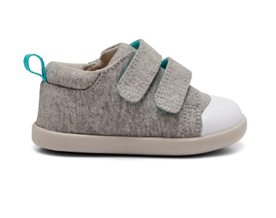
Recommended First Walker Shoes (APMA Approved)
- Ten Little First Walkers
- Stride Rite Sprout Sneaker*
- Stride Rite Soft Motion Collection*
- New Balance NEW B Hook and Loop
- See Kai Run First Walkers*
These options work well until your child transitions into confident running.
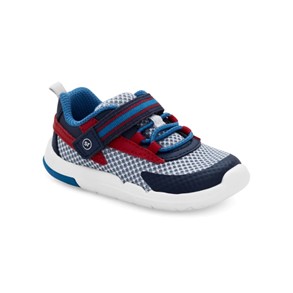
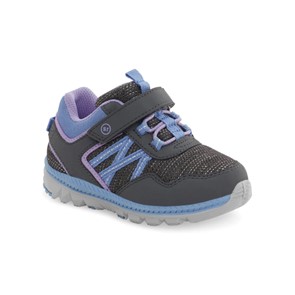
Toddlers (Ages 2–4 Years)
As children become more active, stability becomes increasingly important. Toddlers benefit from shoes that support alignment while still allowing natural movement.
What to Look For
- Sturdy, deep heel cup
Helps stabilize the ankle and reduce excessive pronation, which is common in toddlers. - Wide toe box
Continues to support natural toe splay. - Flexible sole
Encourages strengthening of the intrinsic foot muscles. - Optional high-top design
Helpful for children with ankle instability or inward-collapsing ankles.
Recommended Toddler Shoes
- Ten Little Everyday Original
- Stride Rite Ian Sneaker
- Stride Rite Independent Walker Collection
- See Kai Run Toddler Collection
Ages 5 and Up
By age five, most children have developed a visible arch and a more mature gait pattern. At this stage, shoes can offer more structured support.
Key Features
- Sturdy, deep heel cup
Maintains alignment during running, jumping, and sports. - Wide toe box
Prevents crowding and supports natural biomechanics. - Arch support
Helps maintain proper foot positioning and reduces fatigue—especially important for active Chicago kids.
Recommended Big Kid Shoes
Special Considerations
Toe Walking
Persistent toe walking can be related to sensory preferences, muscle tightness, or neurological conditions. Always consult a pediatric physical therapist for an evaluation—Eyas Landing’s team specializes in gait analysis and early movement patterns.
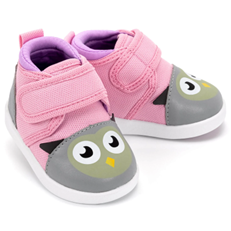
Helpful Footwear Options
- Ikiki Squeaky Toddler Shoes
The squeaker encourages a heel strike and can be removed as needed. - High-top shoes from any of the brands above
Provide added ankle stability.
Children Who Wear Orthotics
Orthotics require shoes that can accommodate extra volume while maintaining proper alignment.
What to Look For
- Go one size up
Ensures enough room for both the orthotic and natural toe movement. - Wide or extra-wide toe box
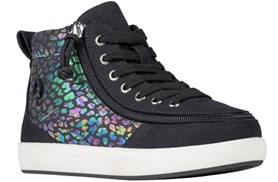
Prevents pressure points and improves comfort. - BILLY Footwear
Excellent for orthotics thanks to wide openings and a zipper design.
Note: Not recommended without inserts, due to limited arch support.
The Future of Therapeutic Footwear
Therapeutic shoes continue to evolve. Current innovations include:
- 3D-printed orthotics and custom shoes
- Smart shoes that track gait patterns
- Eco-friendly materials that stay flexible and durable
- Inclusive designs for children with sensory sensitivities or motor delays
As research advances, footwear will become even more personalized, lightweight, and supportive—helping children of all abilities move confidently through the world.
At Eyas Landing, our pediatric physical therapists stay current on the latest footwear research and innovations, so Chicago families can make informed, developmentally appropriate choices.
Choosing the right shoes for your child is more than a shopping decision—it’s an investment in their long-term musculoskeletal health. From the earliest steps to active school-age play, footwear should support natural development, promote proper alignment, and accommodate your child’s unique needs.
If you have concerns about your child’s gait, foot positioning, or motor development, consider scheduling a pediatric physical therapy evaluation at Eyas Landing. Our multidisciplinary team can assess your child’s movement patterns and help determine the best footwear and supportive strategies to keep them moving safely and confidently.
Healthy feet support healthy movement—and healthy movement supports a lifetime of confidence, exploration, and joy.
Frequently asked questions
What should I look for when buying shoes for a child who wears orthotics?
Shopping for shoes when your child uses orthotics takes a little extra planning, but it doesn’t have to be overwhelming. The most important thing is making sure the shoe can actually fit the orthotic comfortably—without squeezing your child’s toes or throwing off their alignment. Start by going up one full shoe size to create enough room for both the orthotic and natural toe movement.
Look for shoes with a wide or extra-wide toe box, a removable insole, and a firm heel counter to keep everything in place. BILLY Footwear is a great option for many families—its wide opening and zipper design make it easy to get on and off, and it accommodates orthotics well.
Avoid shoes with built-in arch support when using custom orthotics, since the two can work against each other. If you’re unsure where to start, our pediatric physical therapists at Eyas Landing are happy to guide you—because the right shoe and the right orthotic, working together, can make a meaningful difference in how your child moves every day.
My child has just started walking on their toes—should I be concerned?
Toe walking is common in toddlers who are just finding their footing, and many children outgrow it naturally by age two or three. However, if your child is still consistently walking on their toes after age three, it’s worth having a pediatric physical therapist take a look.
Persistent toe walking can sometimes be linked to tight calf muscles, sensory sensitivities, or underlying neurological differences—and the earlier it’s addressed, the easier it is to guide your child toward a healthier gait pattern. In the meantime, footwear can make a real difference.
Shoes with squeaky insoles—like Ikiki Squeaky Toddler Shoes—gently encourage a heel-first step, while high-top styles provide added ankle support. At Eyas Landing, our physical therapy team specializes in gait analysis and can help you understand what’s driving your child’s toe walking and what steps—footwear, exercises, or therapy—will support their unique needs.
How do I know if my child needs therapeutic shoes or orthotics?
Not every child needs therapeutic footwear, but there are signs worth paying attention to. If your child frequently trips or falls, walks on their toes past age three, complains of foot or leg pain after activity, or you notice their ankles rolling inward regularly, it may be time for a professional evaluation.
A pediatric physical therapist can assess your child’s gait, foot alignment, and movement patterns to determine whether supportive footwear, custom orthotics, or targeted therapy would help. At Eyas Landing, we take a personalized approach—because every child’s feet, and every child’s journey, are unique.
This post was originally published in October 2023 and was rewritten in July 2026 to include updated strategies.
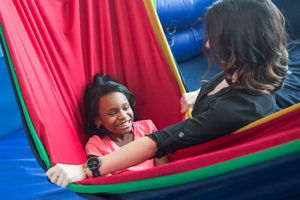
Eyas Landing is a therapy clinic with a mission to provide evidence-based and family-centered therapy services for children, adolescents, and their families. The primary goal is to deliver relationship-based interventions within the most natural environments and to empower families to reach their full potential. To achieve this goal, our highly educated, compassionate staff dedicates time and expertise to create experiences that maximize therapeutic outcomes. The strength, determination, and perseverance of our clients are evident as they succeed in therapy, and ultimately in their daily lives.
Eyas Landing offers a wide range of comprehensive services including Speech Therapy, Occupational Therapy, Physical Therapy, ABA Therapy, Social Work, Family Therapy, and Neuropsych testing. Services are provided throughout the Chicagoland area via Telehealth, In-Home, and in our state of the art clinic.
Want to learn more or you have a specific question? Feel free to connect with us here!